Lifting weights may protect the brain from aging. A new study shows the effect after one year of exercise
A year of resistance training in older adults was associated with a lower brain age estimated from MRI-based models.
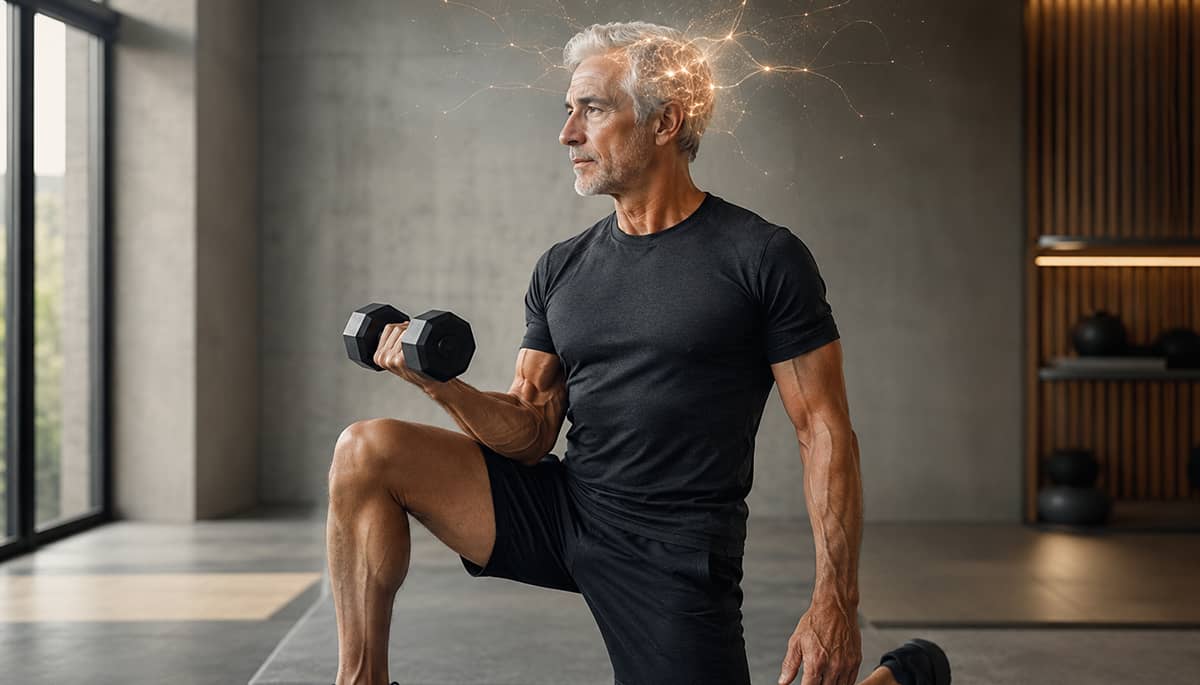
Table of contents
Resistance training may affect more than muscles
Strength training is usually associated with muscle mass, physical performance, stability, and protection against age-related loss of strength. However, a growing body of evidence suggests that its importance may go beyond the musculoskeletal system. In a new study, researchers examined whether a one-year resistance training program could also influence brain aging, assessed using MRI imaging and so-called brain clocks.
This is an important research direction because brain aging does not only appear as worsening memory or concentration. It can also involve changes in connectivity between brain regions, activity within neural networks, and the difference between chronological age and brain age estimated by computational models.
Study details
- Publication title: Randomized controlled trial of resistance exercise and brain aging clocks.
- Authors: Gonzalez-Gomez R., Demnitz N., Coronel C., Gates A. T., Kjaer M., Siebner H. R., Boraxbekk C. J., Ibanez A. M.
- Publication year: 2026.
- Journal: GeroScience.
- Identifier: DOI: 10.1007/s11357-026-02141-x.
- Publication link: Springer.
- Study type and design: randomized controlled trial.
- Population and sample: 309 adults aged 62–70 years.
- Intervention or exposure: participants were assigned to one of three groups: heavy resistance training, moderate-intensity resistance training, or a non-exercise control group. The program lasted one year and included resistance and functional training components.
- Main outcome: the effect of training on brain aging markers assessed with MRI imaging and brain clock models.
- Additional methodological context: the brain clock models were trained on an independent dataset of 2,433 participants and then applied to the 309 participants in this study.
This study did not only measure subjective well-being after exercise. Its strength lies in the use of brain imaging and predictive models that attempt to estimate whether the brain appears biologically “older” or “younger” than the participant’s chronological age.
What changed in the brain after training?
The authors analyzed not only a single brain region but also broader patterns of connectivity and activity. This matters because earlier studies often focused on selected structures, such as the hippocampus, which is important for memory and learning. That approach may have missed more global effects of physical activity.
In this study, one year of heavy resistance training was associated with greater activity compared with the control group, especially in prefrontal regions, the motor cortex, and superior parietal areas. These regions are linked to attention, executive control, and working memory.
The key observations can be summarized as follows:
-
The changes were not limited to one small brain area. The study suggests that resistance training may influence broader patterns of brain function, although some regions responded more clearly than others.
-
The strongest local effects were seen in areas important for cognitive control. This was especially true for prefrontal regions, which are involved in planning, concentration, impulse inhibition, and working with information.
-
The mechanism remains partly open. The authors suggest that some of the effects may be driven by exercise-induced systemic molecular and vascular processes, but this still requires further experimental confirmation.
The brain clock showed a younger profile after one year of exercise
One of the most interesting elements of the study was the use of the brain age gap, which is the difference between brain age predicted by a model and the participant’s actual chronological age. In simple terms, if the model estimates the brain as older than expected, it may suggest a less favorable aging profile. If it estimates the brain as younger, it may suggest better brain integrity.
After one year of training, both exercise groups showed a reduction in this marker. Importantly, the effect was still visible one year after the training program had ended. This suggests that the benefits may not disappear immediately once the intervention stops.
The results were as follows:
-
In the heavy resistance training group, the brain age gap decreased by 1.4 years one year after the program began and by 1.84 years one year after the intervention ended.
-
In the moderate-intensity resistance training group, the brain age gap decreased by 1.39 years one year after the program began and by 2.26 years one year after the intervention ended.
-
In the control group, no significant changes in this marker were observed, which strengthens the interpretation that the effect was related to the training intervention rather than just the passage of time.
At first glance, differences of around 1–2 years may seem modest. In the context of brain aging, however, they may be meaningful because aging is a gradual and cumulative process. Even a moderate shift in trajectory may matter if it is maintained over time.
A strong study, but not without limitations
The randomized controlled design increases the credibility of the findings, especially compared with observational studies, which often show only an association between activity and brain health. Here, participants were assigned to specific groups, which makes it easier to assess the effect of the intervention itself.
That does not mean the results can be directly applied to every person and every training context. The study had several important limitations that should be considered before drawing overly broad conclusions.
The most important limitations include:
-
The participants were older adults aged 62–70 years. The results are especially relevant to this age group, but they do not directly show whether the same effect would occur in younger people.
-
The sample was not fully representative of the general population. According to the study discussion, participants came from a high-income European population, which limits how broadly the findings can be generalized to other groups.
-
The biological mechanisms were not conclusively confirmed. The study shows changes in imaging and brain clock models, but it does not determine exactly which processes were responsible for the effect.
-
Higher intensity does not necessarily mean greater benefit. The findings suggest that the relationship between training dose and brain benefit may be non-linear. Moderate training was also associated with favorable changes.
What does this mean for healthy aging?
The main message from the study is straightforward: resistance training may be one tool for supporting brain health in older age, and its potential importance is not limited to muscle strength. This fits into a broader view of physical activity as a systemic intervention that affects metabolism, blood vessels, inflammation, physical performance, and likely brain function as well.
In practice, the study strengthens the argument that a healthy aging program should include resistance training as one of its foundations. This is not only about lifting very heavy weights. The data suggest that moderate training may also matter, especially when performed regularly, over a longer period, and adjusted to the person’s abilities.
The most practical takeaways are:
-
Strength training should be treated as part of functional and cognitive prevention. Maintaining strength may support independence, but it may also have a positive effect on the brain.
-
Consistency may matter more than extreme intensity. The study lasted one year, which is a reminder that biological adaptations require time and regularity.
-
In older adults, training should be well matched to the individual. A resistance program needs to account for safety, fitness level, movement technique, balance, and recovery.
-
These findings are not an invitation to start very heavy training without preparation. Especially in older adults, gradual progression and professional supervision may be crucial.
Sources
- Gonzalez-Gomez R., Demnitz N., Coronel C., Gates A. T., Kjaer M., Siebner H. R., Boraxbekk C. J., Ibanez A. M. Randomized controlled trial of resistance exercise and brain aging clocks. GeroScience. 2026. https://link.springer.com/article/10.1007/s11357-026-02141-x
- Erickson K. I. et al. Exercise training increases size of hippocampus and improves memory. Proceedings of the National Academy of Sciences of the United States of America. 2011. https://www.pnas.org/doi/10.1073/pnas.1015950108
- Jonasson L. S. et al. Aerobic Exercise Intervention, Cognitive Performance, and Brain Structure: Results from the Physical Influences on Brain in Aging (PHIBRA) Study. Frontiers in Aging Neuroscience. 2017. https://www.frontiersin.org/journals/aging-neuroscience/articles/10.3389/fnagi.2016.00336/full
- von Cederwald B. F. et al. White matter lesion load determines exercise-induced dopaminergic plasticity and working memory gains in aging. Translational Psychiatry. 2023. https://www.nature.com/articles/s41398-022-02270-9
- Friedman N. P., Robbins T. W. The role of prefrontal cortex in cognitive control and executive function. Neuropsychopharmacology. 2022. https://www.nature.com/articles/s41386-021-01132-0
- Menon V., D’Esposito M. The role of PFC networks in cognitive control and executive function. Neuropsychopharmacology. 2022. https://www.nature.com/articles/s41386-021-01152-w
- Dunås T., Wåhlin A., Nyberg L., Boraxbekk C. J. Multimodal Image Analysis of Apparent Brain Age Identifies Physical Fitness as Predictor of Brain Maintenance. Cerebral Cortex. 2021. https://academic.oup.com/cercor/article/31/7/3393/6159016
- Steffener J. et al. Differences between chronological and brain age are related to education and self-reported physical activity. Neurobiology of Aging. 2016. https://pmc.ncbi.nlm.nih.gov/articles/PMC4792330/