Not only street smog. Indoor air still shortens millions of lives
Indoor air pollution still causes almost 3 million premature deaths every year — mostly where people continue to cook and heat their homes with solid fuels.
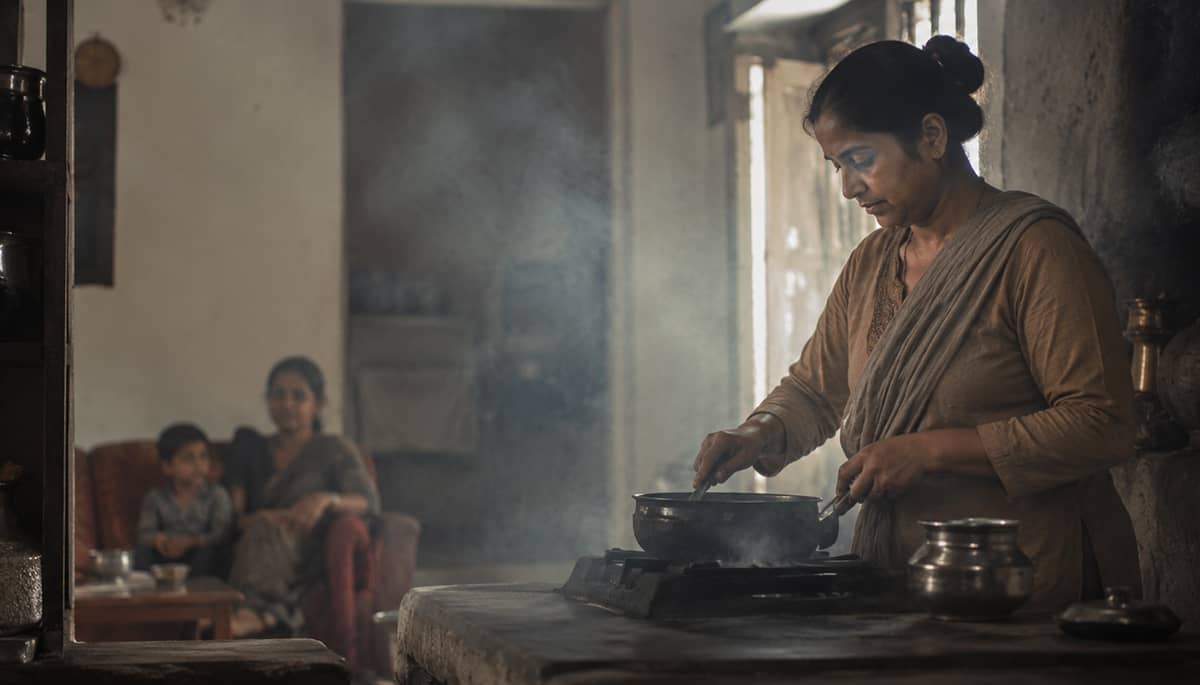
Table of contents
The problem is not always outside
When people talk about air pollution, the first image is usually urban smog, busy roads, or industrial chimneys. Yet for a large part of the world, one of the most important sources of exposure is still the air inside the home.
According to Our World in Data, many of the poorest households still rely on solid fuels, such as wood, charcoal, animal dung, or crop waste, for cooking and heating. When these fuels are burned in poorly ventilated spaces, they produce pollution that is inhaled directly by household members every day.
This is not just a matter of comfort. It is one of the major global health risk factors.
Data details
- Source of the analysis: Our World in Data, Data Insight “Indoor air pollution causes almost three million premature deaths every year”.
- Author: Hannah Ritchie.
- Publication date: April 21, 2026.
- Source of numerical data: Institute for Health Metrics and Evaluation, Global Burden of Disease 2025.
- Scope of the data: global estimates of premature deaths linked to household air pollution.
- Period shown in the chart: 1990–2023.
- Main metric: annual number of premature deaths attributed to household air pollution.
- Interpretive context: the data show a downward trend, but the overall burden remains very large.
These data do not describe one country or one social group. They show a global public health issue strongly linked to poverty, energy access, and household infrastructure.
Why indoor air can be so harmful
Solid fuels burned indoors generate smoke and fine particles that can be inhaled for many hours a day. This exposure particularly affects people who cook, children, older adults, and anyone spending time in poorly ventilated rooms.
Our World in Data points out that this kind of exposure can increase the risk of several conditions, including:
- Cardiovascular diseases, because inhaled pollutants can contribute to systemic stress and vascular damage.
- Stroke, as air pollution is linked with processes that affect blood vessels and circulation.
- Some cancers, especially when long-term exposure to combustion products is involved.
- Respiratory diseases, because smoke and fine particles directly affect the airways and lungs.
- Premature death, as these risks accumulate over years of daily exposure.
The key issue is that this risk factor operates every day. It does not have to be sudden or dramatic. It can become a constant part of life — an invisible background to cooking, heating, and normal household routines.
Progress is real, but the problem has not disappeared
The data show that the number of premature deaths linked to household air pollution has fallen since 1990. According to the Our World in Data chart, the global number of such deaths decreased from around 4.5 million per year in 1990 to around 3 million in 2023.
This is meaningful progress. It reflects, among other factors, the fact that more people have gained access to cleaner fuels and cooking technologies.
At the same time, the scale of the problem remains enormous. Almost 3 million premature deaths each year means millions of people are still dying earlier than they would have without this exposure.
Why this matters for longevity
From the perspective of public health and longevity, this topic highlights something important: not every health intervention looks like a drug, supplement, diagnostic test, or advanced technology.
Sometimes one of the most important interventions is access to a cleaner source of energy.
Cleaner fuels, safer stoves, better ventilation, and energy infrastructure can act as foundations of prevention. They reduce daily exposure to toxic combustion products and may lower the risk of diseases that shorten life on a large scale.
It is a reminder that longevity does not begin only with advanced protocols. It begins with the environment in which a person breathes, sleeps, cooks, and lives every day.