The paradox of comfortable living - how convenience may accelerate aging
King penguins living in zoos may live longer than their wild counterparts, yet show signs of faster biological aging.

Table of contents
Why penguins are an interesting model of the Western lifestyle
At first glance, king penguins may not seem like an obvious model for discussing human health, metabolism, and aging. Yet that is exactly what makes this study interesting. In the wild, king penguins go through long periods of voluntary fasting, followed by intense physical activity related to life in a demanding environment.
In zoos, this rhythm changes dramatically. The animals have constant access to food, move much less, and are protected from many environmental threats. In practice, their situation starts to resemble a simplified model of what is often described in humans as a Western lifestyle: more calories, less movement, greater comfort, and lower exposure to natural stressors.
This is not a perfect comparison to humans, but it is a powerful biological metaphor. Researchers were able to compare animals of the same species living in two radically different environments: a wild, demanding environment and a safe, predictable, food-abundant zoo environment.
Study details
- Publication title: “Lifestyle change accelerates epigenetic ageing in King penguins”.
- Authors: Robin Cristofari, L. R. Davis, G. Bardon, F. A. Nitta Fernandes, M. E. Figueroa, S. Franzenburg, M. Gauthier-Clerc, F. Grande, R. Heidrich, M. Hukkanen, Y. Le Maho, M. Ollikainen, E. Paciello, P. Rampal, N. C. Stenseth, E. Trucchi, S. Zahn, C. Le Bohec, and B. S. Meyer.
- Publication year: 2026.
- Journal: “Nature Communications”.
- Identifier: DOI: 10.1038/s41467-026-70527-8.
- Study type: comparative study of epigenetic aging in king penguins living in the wild and in zoos.
- Population: king penguins compared between natural wild conditions and zoo housing conditions.
- Exposure: transition from a natural environment involving periods of fasting and high physical activity to a zoo environment with constant access to food and substantially lower activity levels.
- Main outcome: zoo-housed penguins showed accelerated epigenetic aging relative to chronological age compared with wild penguins.
- Publication link: Nature Communications.
This study is especially interesting because it does not show a simple “more food equals shorter life” relationship. The result is more paradoxical: zoo penguins aged faster biologically, yet also lived longer.
What the researchers found
The researchers used an epigenetic clock adapted to the penguin genome to estimate the animals’ biological age. These clocks are based on DNA methylation patterns — chemical changes that do not alter the genetic sequence itself, but can reflect the pace of biological aging.
The results showed that zoo-housed king penguins had accelerated epigenetic aging compared with wild penguins. Depending on the model used, the difference was estimated at around 2.5 to 6.5 years of penguin biological age.
The most important observations can be summarized as follows:
-
Zoo-housed penguins showed an older epigenetic profile than wild penguins of a similar chronological age. In other words, their bodies appeared biologically older than would be expected based only on the number of years lived.
-
Accelerated aging was linked to conditions resembling a sedentary, well-fed lifestyle. Penguins in zoos had fewer opportunities for intense movement and did not experience the natural long fasting periods that are part of king penguin biology.
-
Epigenetic changes involved genes and pathways related to metabolism, cell growth, nutrient signaling, and adaptation to energy abundance. This suggests that the penguins’ bodies had to adapt to an environment where food was constantly available and the need for movement was much lower.
-
The effect did not appear to be driven only by clinical obesity. According to the study description, the penguins were not clinically obese, which strengthens the idea that the problem may be the loss of natural metabolic variability: less fasting, less effort, fewer periods of deficit and recovery.
Longer life does not always mean healthier life
The most interesting part of the study is that accelerated epigenetic aging did not mean earlier death. Quite the opposite: penguins living in zoos reached a higher median survival age than wild penguins. According to the reported data, median survival was almost 21 years in zoo penguins and around 13.5 years in wild penguins.
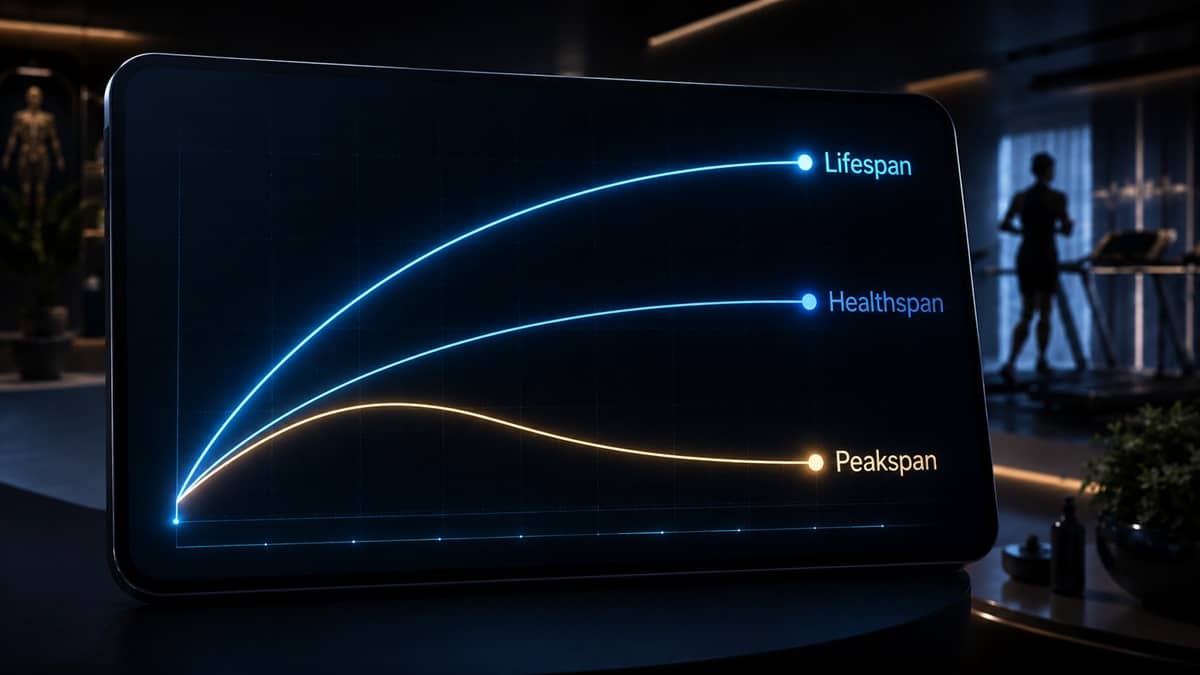
This finding clearly illustrates the difference between lifespan and healthspan. Lifespan refers to total length of life. Healthspan refers to the period of life spent in good functional condition, metabolic health, and physical capacity.
In this context, zoo penguins may represent a situation in which:
-
Organisms live longer because they are protected from predators, hunger, environmental disease, extreme weather, and injury. Zoos reduce many external causes of death that are highly relevant in the wild.
-
At the same time, their biological aging may accelerate because the environment limits natural movement and removes periods of energy scarcity. The organism remains safe, but loses some of the stimuli that may help maintain metabolic fitness in the wild.
-
Longer life does not automatically mean better biological condition. This is also an important lesson for humans, because modern medicine and comfortable living can extend survival without necessarily extending the period of full function to the same degree.
This is the paradox of comfortable living: protection from threats may extend life, while excessive convenience may simultaneously weaken the body’s biological resilience.
What this says about aging
The penguin study fits into a broader discussion about how lifestyle affects the pace of aging. The issue is not just body weight, but the entire metabolic environment: calorie availability, activity level, eating rhythm, periods of effort, periods of rest, and the body’s capacity to adapt.
The findings are important because they suggest that aging may be shaped not only by genes or disease, but also by the everyday environmental context. The body does not function in isolation. It responds to whether it has to move, whether it has constant access to energy, whether it experiences periods of deficit, or whether it spends most of its time in a state of abundance and low effort.
For humans, this observation does not mean that hunger, stress, or harsh living conditions should be romanticized. The meaning is more subtle:
-
Physical activity is probably not just a tool for burning calories. It is also a biological signal that affects metabolism, the cardiovascular system, muscles, mitochondria, and processes linked to aging.
-
Periodic absence of energy excess may be an important adaptive stimulus for the body. This is not about extreme restriction, but about the possibility that constant food availability and a lack of metabolic breaks may alter nutrient-sensing pathways.
-
Comfort itself is not the problem, but comfort without movement, rhythm, and effort may become biologically costly. The modern environment protects against many threats, yet also removes some stimuli that were a natural part of life for millions of years.
The most practical message is not: “live less comfortably.” A more precise message is: in a world of abundance, it may be necessary to consciously recreate stimuli that used to be part of everyday life — movement, effort, periods without food, exposure to variability, and recovery.
Limitations and cautious interpretation
This study is fascinating, but it should not be treated as direct proof that humans in comfortable environments always age faster. King penguins are a separate species with their own biology, ecology, and life rhythm. Their natural periods of fasting and activity are much more extreme than the typical human lifestyle.
The most important interpretive limitations are:
-
The findings cannot be directly transferred to humans. Penguins are an interesting comparative model, but they do not replace clinical, cohort, or intervention studies in people.
-
Epigenetic aging is a useful marker, but it is not a complete picture of health. An epigenetic clock can indicate biological changes, but it does not independently describe all aspects of fitness, resilience, cognitive function, or quality of life.
-
Zoo environments differ from wild environments in many factors at the same time. Beyond food and movement, other elements may matter, including stress, diet composition, microbiome, pathogen exposure, seasonal rhythm, and social conditions.
-
The longer lifespan of zoo penguins does not mean that accelerated epigenetic aging is irrelevant. Rather, it shows that total lifespan depends on many layers: organismal biology, environment, external mortality risk, and medical care.
The safest interpretation is therefore this: the study strengthens the hypothesis that low physical activity and constant energy abundance may accelerate selected biological markers of aging, while also showing that lifespan and quality of aging are not the same thing.