SFD creatine contaminated with mercury – up to 1300% above safe limits
A major scandal that exposed serious flaws in supplement quality control.
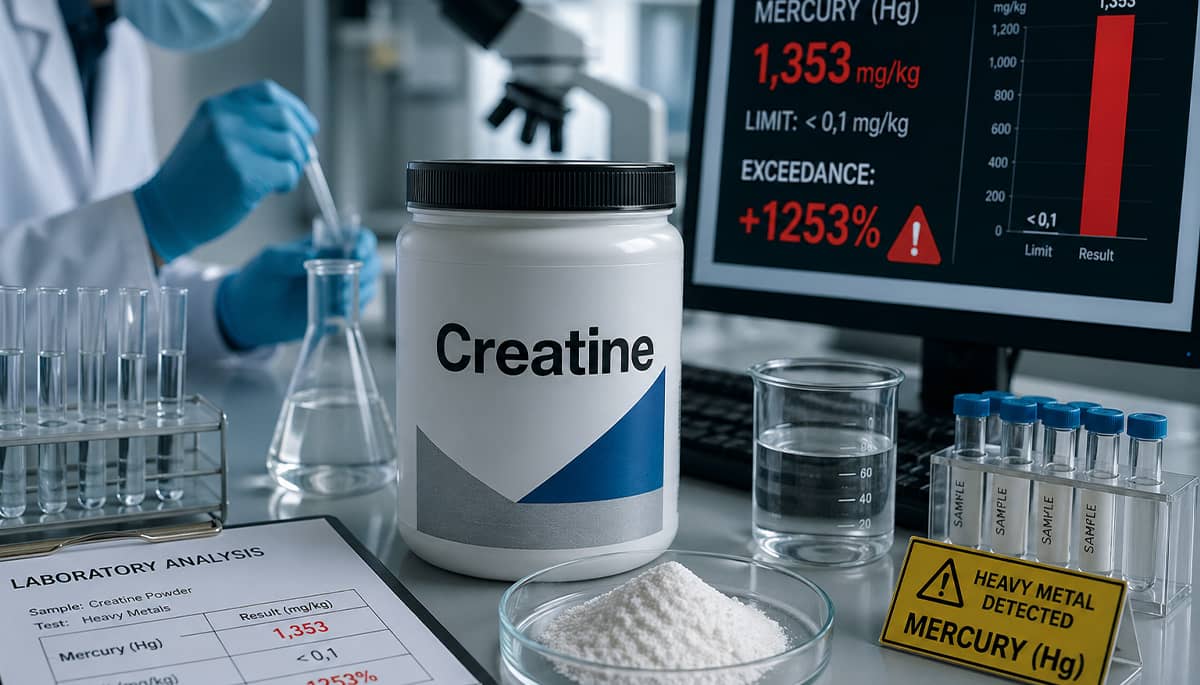
Table of contents
Introduction
In 2023, the Polish supplement market was shaken by a major controversy. One of the most popular brands – SFD – became the center of attention after mercury was detected in its creatine products.
This was not just an isolated quality issue. It exposed a systemic problem: the lack of effective control over raw material quality within the global supplement supply chain.
For many consumers, it was a wake-up call – a realization that even widely trusted products can pose real health risks.
Study details
The entire case began with an independent laboratory test conducted outside the official control system.
- Source of detection: test commissioned by an online creator (fit_recenzje)
- Laboratory: GBA Polska
- Reported to: local sanitary authorities
- Verification: confirmed by official government testing
- EU limit: < 0.1 mg/kg
- Measured value: 1.353 mg/kg (~1300% of the limit)
This was not speculation or internet noise. The findings were validated by public institutions, confirming that the issue was real and measurable.
What was found?
Mercury – one of the most toxic heavy metals – was detected in the tested samples.
- exceedances above 1000% of the limit
- limited to specific product batches
- contamination originated from raw material
This means a product available on the market contained a substance at levels that should never pass safety thresholds. This was not a minor deviation, but a serious breach of quality standards.
Market reaction
Once the issue became public, actions were taken – but only after the contaminated product had already reached consumers.
- withdrawal of affected batches
- public warnings from authorities
- refund options for customers
- official statements
From a system perspective, this highlights a critical failure: quality control mechanisms did not work at the stage where they matter most – before the product reaches the market.
Root causes
The official explanation pointed to a faulty raw material supplier. However, this does not fully address the core issue.
- raw material sourced externally
- quality certificates failed to detect contamination
- incoming quality control failed
In practice, this indicates that the verification system was insufficient. In an industry where consumer safety should be non-negotiable, such gaps are a serious warning sign.
Market impact
The consequences extended far beyond a single company and affected the entire supplement industry.
- sharp decline in consumer trust
- increased demand for independent testing
- pressure for transparency in quality reporting
- more cautious purchasing behavior
This event changed perception – supplements were no longer automatically seen as safe by default.
Health risks associated with mercury
Mercury is one of the most well-studied environmental toxins, with clearly documented effects on human health.
- damage to the nervous system (memory, focus, coordination)
- toxic effects on the kidneys
- hormonal disruption
- chronic inflammation
- accumulation in the body over time
One of the most critical aspects is bioaccumulation – even small doses, taken regularly, can lead to progressive damage.
In practice:
- short-term exposure may not cause immediate symptoms
- long-term use of contaminated products could be harmful
- risk increases with daily supplementation
This cumulative effect is why even “moderate” exceedances should never be dismissed.
Key takeaways
This case shows how fragile product safety can be – even in widely trusted categories.
- quality control cannot rely solely on supplier declarations
- certifications do not guarantee safety
- independent testing is essential
- responsibility for safety should lie with the producer, not the consumer
The most important lesson is simple:
supplements are not a category where quality compromises are acceptable.