Joint Range of Motion Assessment
Assesses joint flexibility and mobility across major movement patterns using a goniometer
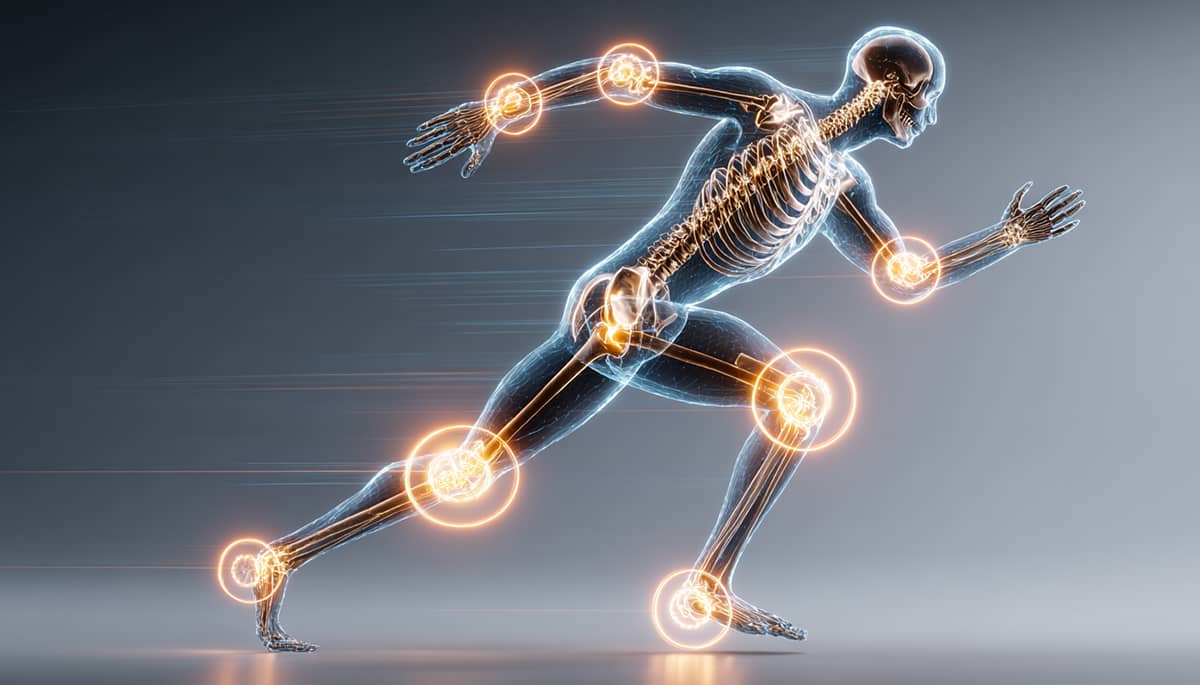
Table of contents
Basic data
This assessment evaluates the range of motion (ROM) in key joints such as the shoulders, elbows, hips, knees, and ankles. It helps detect limitations in flexibility, asymmetries between limbs, and potential movement dysfunctions.
Measurements are taken using a goniometer to compare actual mobility to normative reference values, supporting injury prevention, rehabilitation, and athletic performance optimization. It is especially useful when designing a personalized training plan tailored to your movement capacities and limitations.
Category: Performance tests
Level: Beginner
Usefulness: High
Level
Beginner
Usefulness
High
Personalized training planning
Enables coaches and physiotherapists to tailor exercise selection, volume, and mobility work to your specific limitations and asymmetries.
Identifies movement restrictions
Detects reduced mobility or stiffness in specific joints, which may impair performance or increase injury risk.
Tracks progress over time
Enables consistent monitoring of improvements in flexibility and symmetry after mobility or rehab work.
How it works
Preparation and positioning
The participant assumes a standardized position for each joint, ensuring repeatable measurements.
Joint-by-joint measurement
The goniometer is aligned with anatomical landmarks while the joint is taken through its range. Angles are recorded for both limbs.
Measures
Shoulder joint
Evaluates flexion, extension, internal and external rotation, abduction, and adduction. A key indicator of shoulder girdle mobility, influencing stability and upper-body movement mechanics.
Elbow and forearm
Measures flexion and extension at the elbow, as well as pronation and supination of the forearm. Reflects the functional range required for pushing, pulling, and gripping movements.
Wrist
Assesses dorsal (extension) and palmar (flexion) movement, along with radial and ulnar deviation. Important for proper force transfer in resistance training and daily manual activities.
Hip joint
Analyzes flexion, extension, abduction, adduction, and both internal and external rotation. Critical for lower-body mobility, squat mechanics, and gait efficiency.
Knee joint
Measures flexion and extension along the sagittal plane. Reduced range may affect running biomechanics and increase overload risk.
Ankle joint
Evaluates dorsiflexion and plantarflexion. Limited mobility in this joint often restricts squat depth and dynamic take-off performance.
Reliability
Repeatability
Results are reasonably consistent when measured by the same trained professional using standardized methods.
Sensitivity to positioning
Slight changes in body or goniometer alignment can influence results. Proper technique is essential.
Limitations
Operator dependency
Accuracy depends on the skill and consistency of the person conducting the assessment.
Limited scope
Does not assess muscle strength, coordination, or real-world functional movement patterns.
Frequency
Suggested cadence
Every 3–6 months for general mobility tracking. More frequent testing during rehabilitation or targeted flexibility interventions.
Cost
Typical costs
Usually included as part of a broader functional assessment or personal training session. Low or no cost.
Availability
Where available
Performed by physiotherapists, athletic trainers, or knowledgeable personal trainers in clinics or gyms.
Preparation
How to prepare
Wear flexible clothing. Warm-up is optional but may reflect true functional range if included consistently.
Interpretation
Normative benchmarks
Each joint has a defined healthy range—deviations suggest areas for mobility work or further diagnostics.
Asymmetry flags
Noting discrepancies between left and right side can indicate compensations or prior injuries.
Alternatives
Functional Movement Screen (FMS)
Offers a broader picture of movement quality and motor control but with less precise joint-specific metrics.
Digital mobility apps
Some apps use video-based analysis or motion sensors to estimate joint range of motion at home.
FAQ
Can I do this test at home?
It is possible with a goniometer and some training, but results are more reliable when done by a professional.
Is reduced range of motion a problem?
Limited mobility can lead to pain, compensation patterns, or decreased athletic performance—especially if asymmetrical.