Reversing Grey Hair
The state of science in 2026 and a product ranking
Table of contents
Can grey hair be reversed? What science says about reversing grey hair, which products work, and what makes sense in 2026
For decades the answer was: no. Greying was considered a one-way, biologically programmed process — something you could at best slow down, but never stop, let alone reverse. In recent years, however, science has taken an unexpected turn. We now know that certain types of greying are reversible. We know which mechanisms are responsible. And we know — equally important — that a large proportion of products on the market either do none of that, or do something entirely different from what they promise.
This article is an attempt at an honest summary: what science actually says, what is possible, what is marketing, and what is worth doing — in 2026.
Note: This article is based on scientific data available up to April 2026. It does not constitute medical advice — in cases of sudden or intense greying, particularly in people under 30, a consultation with a dermatologist or trichologist is recommended.
Editorial independence. The author has no affiliation with any of the companies or products mentioned in this article. The text contains no affiliate links or hidden forms of monetisation. The author derives no financial or personal benefit from any of the recommendations presented. The goal of this article is an honest, objective analysis of available solutions and providing the reader with practical knowledge to navigate the topic of grey hair reversal with confidence.
Introduction: Is reversing grey hair even possible?
Why the topic of grey reversal attracts so much interest
Greying hair is one of the most visible signals of ageing. Unlike wrinkles, which develop gradually and unevenly, the first grey hairs appear suddenly and unmistakably. For many people — particularly those who start greying early, between the ages of 25 and 40 — it is a powerful psychological experience.
The anti-grey product market exploded after 2021, when several landmark scientific studies showed that greying is not strictly irreversible. The internet filled with products promising “natural colour restored in 3 weeks”, “melanocyte reactivation” and “grey reversal without dyeing”. Searches for the term “anti-grey serum” increased by 280% in the US in a single year.
At the same time, the market filled with dishonest advertising, fake reviews, and products with no connection whatsoever to the biology of greying.
A short, honest answer
Yes — greying is reversible in certain cases, or at least slowable. But “certain cases” requires a crucial qualification. A full biological reversal of advanced, genetically driven grey hair is not possible today with any consumer product. Partial repigmentation — slowing the process, protecting surviving melanocytes, darker new growth — is real, but requires time, consistency, and the right multi-pronged approach.
The key distinction: cosmetic effect vs. genuine repigmentation
Before we go further, we need to establish one thing: most products on the market work cosmetically, not biologically. This is a fundamental difference that manufacturers deliberately fail to highlight.
- A cosmetic effect means the product colours or darkens hair that has already grown — chemically or physically. It works quickly (days to weeks), but the effect disappears immediately on discontinuation. No biological mechanism is involved.
- Genuine repigmentation means the product influences the hair follicles and causes newly growing hairs to contain more melanin. The effect is slow (months), more durable, and depends on the biological state of the follicles.
Confusing these two mechanisms is the most common mistake made both by consumers and by authors of product “reviews” on the internet.
What this article does not promise
This article will not tell you that any given product “will definitely work”. No honest article can say that, because the biology of greying is too individual. What it will tell you is which products have a plausible mechanism of action, which are misleading, which are outright frauds, how to build your own protocol, and how to assess results without illusions.

Where hair colour comes from
Melanin: two types, two colours
Hair colour comes from a single source: melanin. This is a biological pigment produced by specialised cells — melanocytes — and incorporated into the structure of growing hair.
Melanin occurs in two forms:
- Eumelanin — a dark pigment, in shades from brown to black. It determines dark hair colour.
- Pheomelanin — a light pigment, yellow-orange to red. It predominates in red-haired and blonde people.
The ratio between eumelanin and pheomelanin determines the final hair colour. Dark blonde hair has a lot of eumelanin with some pheomelanin; red hair — the reverse. Blonde is a small amount of both, black — dominance of eumelanin.
Melanocytes and their role
Melanocytes are pigment cells embedded in the hair follicle, near the hair bulb. This is where they produce melanin during the hair’s growth phase (anagen) and transfer it to keratinocytes — the cells that build the hair shaft.

Crucially, melanocytes do not work in isolation. Their function depends on melanocyte stem cells (McSCs), which reside in what is called the bulge region of the follicle. The McSCs are the melanocyte “reservoir” — they activate during each hair growth cycle and replenish the pool of functioning melanocytes.
Tyrosinase and the process of melanogenesis
Melanin production is a multi-step enzymatic process called melanogenesis. The starting point is the amino acid tyrosine — a substrate from which tyrosinase (the key enzyme) produces successive metabolites leading to melanin.
Simplified pathway:
- Tyrosine → DOPA → DOPAquinone (via tyrosinase)
- DOPAquinone → eumelanin or pheomelanin (depending on the chemical environment)
- Melanin enters melanosomes (cellular organelles)
- Melanosomes are transferred to keratinocytes and incorporated into the hair shaft
Disruption of any step of this process — tyrosine deficiency, tyrosinase dysfunction, melanocyte damage — results in less melanin and a lighter (or grey) hair.
The hair growth cycle: anagen, catagen, telogen
Hair does not grow continuously. Its life cycle consists of three phases:
- Anagen (growth phase) — lasts 2 to 7 years. During this phase melanocytes are active and produce melanin. This is the only time a new hair can be pigmented.
- Catagen (transitional phase) — lasts 2–3 weeks. Melanocyte activity ceases.
- Telogen (resting phase) — lasts 3–4 months, after which the hair falls out and the cycle repeats.
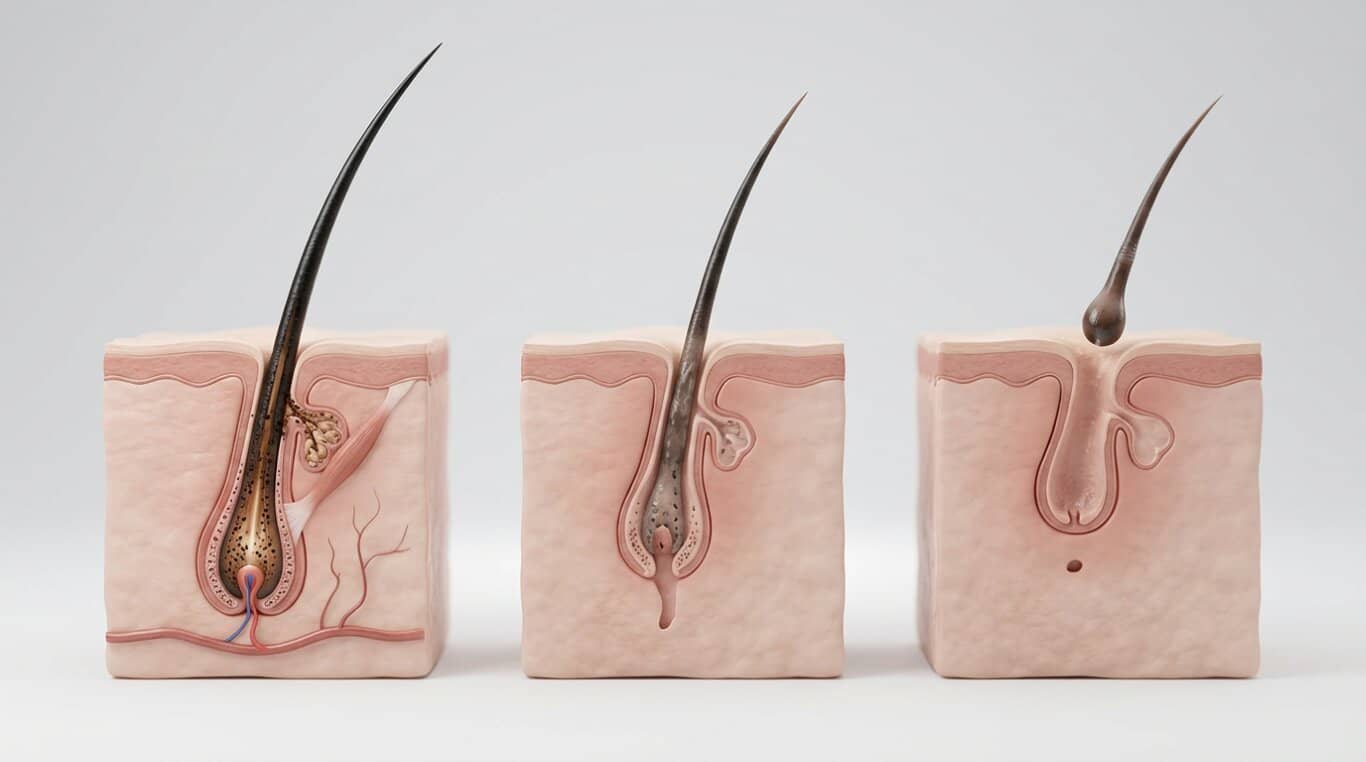
Hair grows at approximately 1 cm per month. This means that a biological change in pigmentation (e.g. in response to a serum) only becomes visible after many weeks or months — once the newly growing hairs emerge above the surface.
Why colour is produced in the follicle, not on the shaft surface
This distinction is crucial for understanding why most products cannot do what they promise. The hair shaft above the scalp is a dead structure — it has no cells, no metabolism, no biological reactions take place within it. Melanin is incorporated into its structure once and for all during the growth phase.
No product applied to an already-grown grey hair can biologically restore its colour — because there are no living cells there to respond. At best, it can colour it chemically.
Biological action is only possible at the level of the hair follicle — i.e. on the scalp, at a depth of 1–2 mm beneath the epidermis.
Why hair turns grey — the main mechanisms
Depletion and dysfunction of McSCs
The main cause of age-related greying is the gradual depletion of the melanocyte stem cell (McSC) pool. Each hair growth cycle consumes part of that pool. When too few McSCs remain, or when they fail to function correctly, new melanocytes are not produced in sufficient numbers — and new hair grows without pigment.
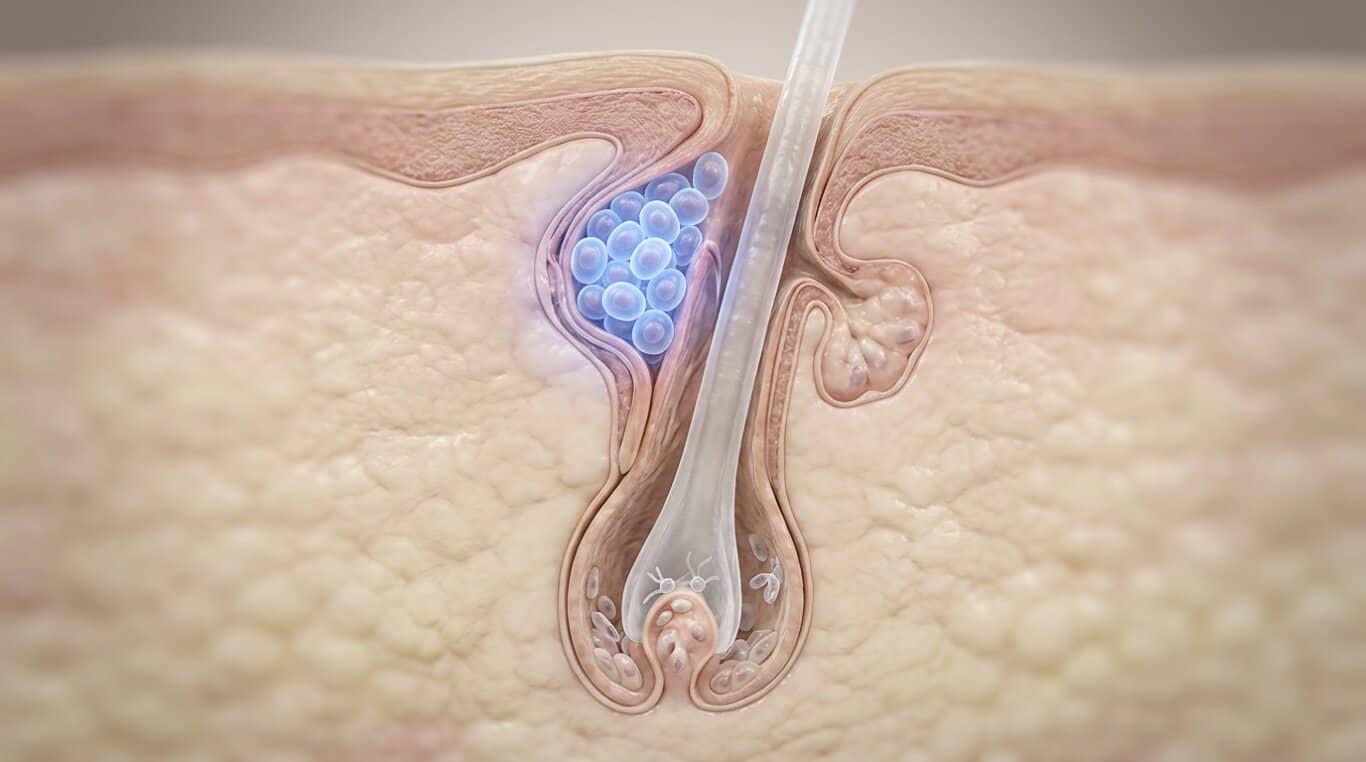
The study by Sun et al. (2023), published in Nature by a team from NYU Langone Health, revealed an additional mechanism: over time, McSCs literally “get stuck” in the wrong part of the hair follicle. Instead of migrating to the bulb, where they receive maturation signals (including WNT proteins), they remain trapped in the bulge region without access to those signals. They cannot mature into melanocytes — and hair grows grey, even though stem cells still exist.
This discovery is important because it suggests that greying does not always mean irreversible destruction of McSCs — sometimes it is a problem of mobility that could potentially be corrected.
Oxidative stress, H₂O₂ and catalase
The second key mechanism: the accumulation of hydrogen peroxide (H₂O₂) in hair follicles. Follicle cells naturally produce small amounts of H₂O₂ as a by-product of aerobic metabolism. Normally the enzyme catalase breaks it down into water and oxygen — without harm to melanocytes.
With age, catalase production declines. H₂O₂ accumulates. At high concentrations it literally bleaches melanin from within the hair shaft (which is why grey hairs often have a yellowish tint in certain light — that is partially oxidised melanin) and damages melanocytes, impairing their function.
Oxidative stress is also amplified by: cigarette smoking, UV exposure, air pollution, chronic inflammation, and alcohol.
The effect of psychological stress and the sympathetic nervous system
In 2021, researchers from Columbia University, led by Dr. Martin Picard, published a landmark study in eLife that was the first in humans to demonstrate a direct link between psychological stress and greying — and, more importantly, a partial reversal of that process once the stress subsided.
The mechanism is as follows: in response to intense stress, the sympathetic nervous system releases noradrenaline. This substance reaches the hair follicles and causes excessive activation of McSCs, which rapidly differentiate into melanocytes — thereby depleting their reserve faster than normal. When stress subsides, if McSCs have not been entirely exhausted, partial regeneration is possible.
One of the hair strands studied belonged to a woman who had gone through an exceptionally stressful two months (a breakup, financial problems). The strand had a dark tip, a white middle section, and a dark base again. The dates matched precisely with the onset and resolution of the stress.
Genetics: the IRF4 gene and its practical implications
Scientists have identified one gene directly linked to greying: IRF4 (Interferon Regulatory Factor 4). It controls melanin production and its breakdown. However, IRF4 accounts for only about 30% of the variation in greying between people — the rest is environment, lifestyle, and random cellular errors.
Practical takeaway: if your parents started going grey early, you probably will too — but it is not a sentence. Non-genetic factors have a real influence on the rate and severity of the process.
Deficiencies: B12, copper, zinc, iron, vitamin D
Several micronutrient deficiencies directly affect melanogenesis:
- Vitamin B12 — deficiency is a documented cause of premature greying, particularly in vegetarians, vegans, and older people (poorer absorption). Correcting the deficiency can partially reverse greying.
- Copper — a cofactor of tyrosinase, the key enzyme of melanogenesis. Copper deficiency literally slows melanin production.
- Zinc — associated with correct hair follicle function. Studies have found lower zinc levels in people with premature greying.
- Iron (ferritin) — in anaemia and ferritin deficiency, hair loses pigment faster.
- Vitamin D — a less direct role, but deficiency is associated with poorer condition of the skin and follicles.

Important: deficiency-related greying is the only type that is fully reversible — after correcting the deficiency, repigmentation of new growth can be observed.
Other factors: inflammation, lifestyle, smoking, UV
- Cigarette smoking — studies have found a clear correlation between smoking and premature greying. Mechanism: oxidative stress and DNA damage to melanocytes.
- UV exposure — UV radiation destroys melanocytes and increases oxidative stress in the scalp.
- Chronic inflammation — inflammatory cytokines disrupt the follicle environment and may accelerate McSC depletion.
- Autoimmune conditions — e.g. alopecia areata and vitiligo can cause selective destruction of melanocytes by the immune system.
Types of greying and their practical significance
Types and their susceptibility to reversal
Not all greying is biologically identical. Distinguishing types is crucial because it determines which strategy makes sense.
Physiological greying — related to natural ageing. Usually begins after the age of 40. McSCs are gradually depleted. Difficult to reverse, but possible to slow.
Premature greying — conventionally defined as grey hair appearing before age 20 in Asians, before 25 in Africans, and before 30 in Europeans. Can have a genetic, deficiency-related, or stress-related basis. Diagnosis is important.
Deficiency-related greying — the most favourable prognosis. After identifying and correcting the deficiency (B12, D, zinc, copper), repigmentation of new growth is possible and documented in the medical literature.
Stress-related greying — partially reversible when chronic stress subsides, if McSCs have not been completely depleted. Requires time.
Genetic greying — the most difficult. When McSCs are fully exhausted, greying is irreversible by any product available today.
When greying becomes practically irreversible
The critical tipping point is complete depletion of the McSC pool in a given follicle. Once that happens, the follicle produces only unpigmented hairs — and no topical product will change that, because there are no longer stem cells to reactivate.
The signal of this state is a white (not grey) hair. A grey hair still contains residual amounts of melanin — meaning melanocytes are still partially functioning or did so recently. A white hair contains none at all.
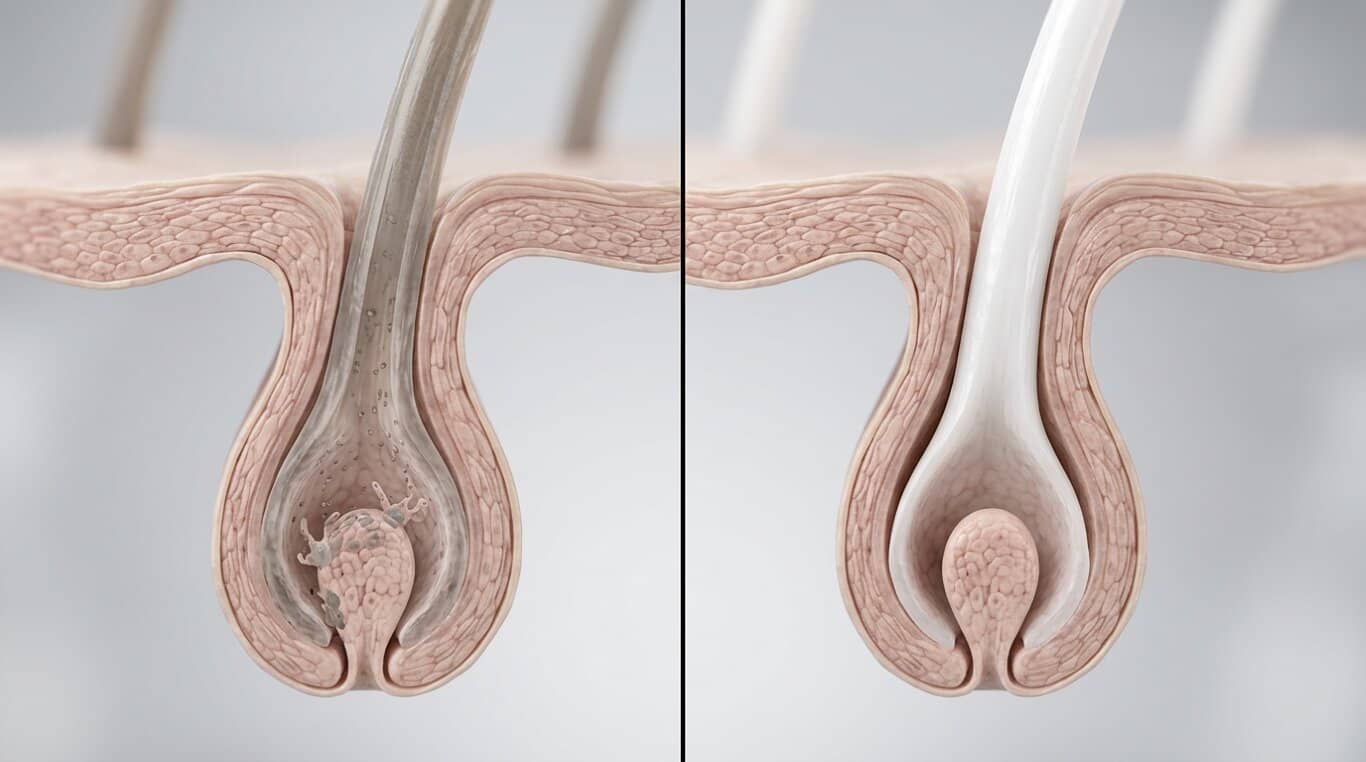
This distinction has enormous therapeutic significance: biological products (serums with Greyverse, Darkenyl) may potentially work on grey hairs (where McSCs still exist), but have negligible chance on white hairs with fully depleted McSCs.
Why no product “de-pigments” an already-grown grey hair
This needs to be stated plainly, because many products imply otherwise:
The hair shaft above the scalp is a dead structure. It has no cells, no metabolism, no biological reactions take place. Melanin is incorporated once and for all during the growth phase. No active ingredient applied to a grey hair can biologically repigment it — because there are no living melanocytes in it.
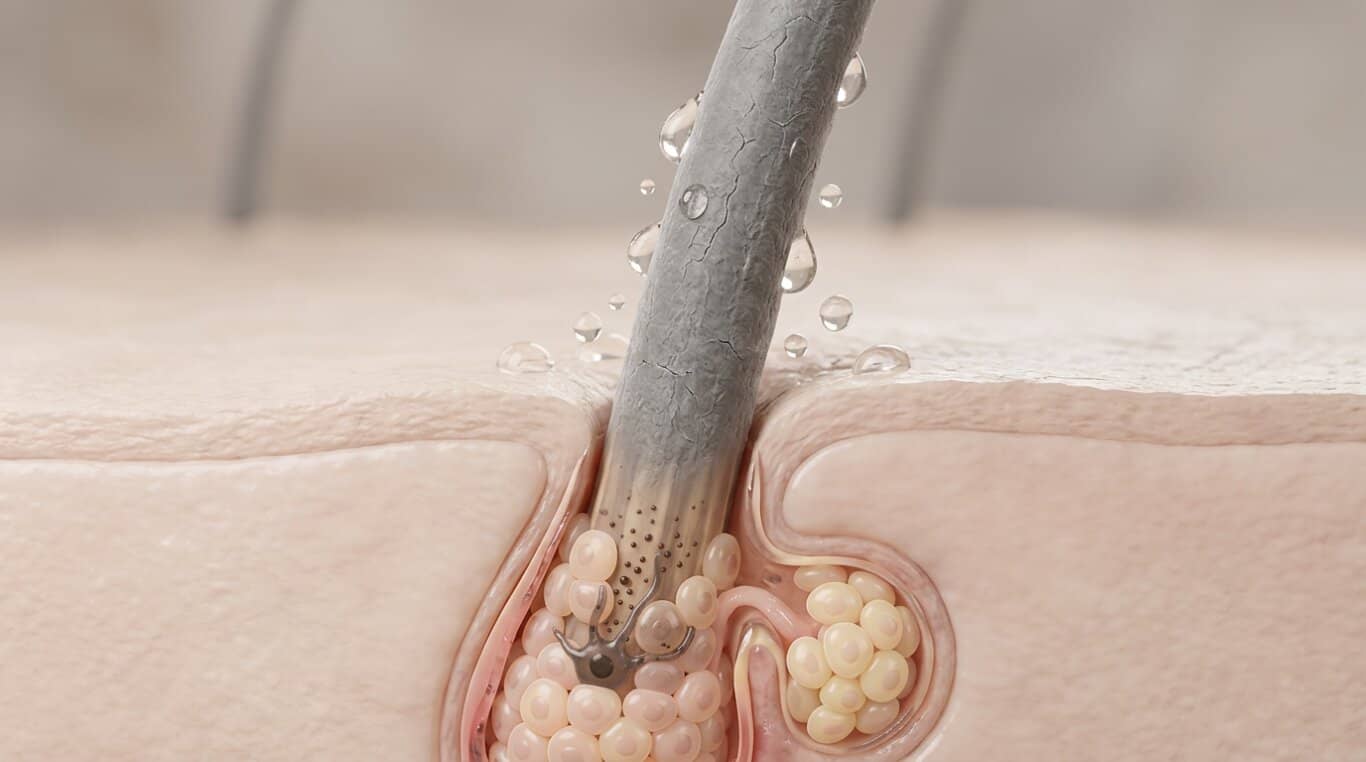
The only thing that can change the colour of an already-grown hair is a chemical dye — as in conventional hair dye or progressive colouring products.
The science of grey reversal — the current state of knowledge
The most important discoveries of recent years
Several studies from recent years have fundamentally changed the scientific understanding of greying:
Rosenberg, Rausser, Picard et al. (2021), eLife — the first study in humans showing that stress-induced greying is reversible. Analysis of individual hair strands showed that periods of intense stress correlated with pigment loss, and its resolution — with partial repigmentation. In one case, a two-week holiday produced visible darkening of growing hair.
Sun, Lee, Hu, Ito et al. (2023), Nature — the discovery that McSCs can “get stuck” in the bulge region and lose their ability to migrate towards the bulb, where they receive maturation signals. This opened a new therapeutic direction: instead of regenerating McSCs, one can try to restore their mobility.
Iida, Kagawa, Kato et al. (2024), Antioxidants, Nagoya University — researchers showed that luteolin, a natural antioxidant found in celery, parsley, peppers, broccoli, and carrots, completely reversed greying in mice genetically predisposed to rapid greying. Mice treated with luteolin retained full pigmentation into old age. Results were publicly announced in February 2025.
Applied Biology — CS-001 clinical trial (Phase 3, start: June 2025) — the first small molecule entering Phase 3 clinical trials as a treatment for grey hair. CS-001 affects the transport of melanin from melanocytes to keratinocytes. Results expected in 2027.
Lueangarun et al. (2025), Journal of Cosmetic Dermatology — a study of 10 patients using exosomes from rose stem cells showed partial repigmentation in the majority of participants. A small, preliminary study, but promising.
What has been shown in humans, and what only in mice or in vitro
Not all findings carry the same evidential weight. Here is a simplified map of the state of knowledge:
| Phenomenon / intervention | Evidence in humans | Mice / animals | In vitro |
|---|---|---|---|
| Stress causes greying | ✅ Yes | ✅ Yes | – |
| Stress reduction can reverse greying | ✅ Partially | ✅ Yes | – |
| H₂O₂ destroys melanocytes | ✅ Indirect | ✅ Yes | ✅ Yes |
| B12 deficiency causes greying | ✅ Yes | – | – |
| B12 supplementation reverses greying | ✅ Clinical cases | – | – |
| Luteolin reverses greying | ❌ No data | ✅ 2025 | ✅ Yes |
| Greyverse/Darkenyl stimulates melanogenesis | ⚠️ Small studies | – | ✅ Yes |
| McSC trapping as a greying mechanism | ⚠️ Hypothesis | ✅ 2024 | ✅ Yes |
| CS-001 reverses greying | ⚠️ Phase 3 ongoing | – | ✅ Yes |
Is biological reversal of greying possible?
With deficiency-related greying: yes — and this is scientifically documented. Correcting a B12 or copper deficiency can lead to repigmentation of new growth within a few months.
With stress-related greying: partially yes, if stress is reduced before McSCs are completely exhausted. The process is slow and uncertain, but possible.
With genetic and age-related greying: slowing and protection — yes; full biological reversal of advanced greying — not yet, with any consumer product currently available.
What is happening in laboratories right now
Beyond CS-001, several other research directions look promising:
Topical rapamycin — an mTORC1 inhibitor used in transplantology, which in mouse studies showed the ability to reverse greying by inhibiting premature McSC activation. Available off-label in several longevity clinics.
Exosomes and stem cells — regenerative therapies delivering growth signals directly to follicles. Still experimental and expensive, but the first clinical results (Lueangarun et al., 2025) offer a genuine response to McSC exhaustion.
Unexpected “de-greyors” — observation by oncologists: some tyrosine kinase inhibitors (TKIs) and MEK inhibitors used in chemotherapy cause repigmentation of grey hair as a side effect. This confirms that the biological mechanism is real — the problem is the lack of a safe, topical version of these substances.
The outlook for the next 5–10 years
The results of the CS-001 trial (expected 2027) could be a breakthrough — this is the first product entering Phase 3 clinical trials specifically for greying. Exosome therapies and microneedling with active substance delivery to follicles will continue to develop. A realistic timeline for a truly pharmacological “treatment” of grey hair is 7–15 years from now.
What is realistically possible in 2026
What is possible
- Slowing the progression of greying — by using biologically active serums combined with a lifestyle that minimises oxidative stress.
- Protecting surviving melanocytes — by reducing H₂O₂, supplying antioxidant substances, and stimulating melanocytes with peptides.
- Partial repigmentation of new growth — realistically achievable in people with early-stage greying (below 30% grey hairs) with consistent use of a serum containing Greyverse and Darkenyl for 3–6 months.
- Full repigmentation in deficiency-related greying — possible after correcting the deficiency.
What should not be expected
- Full reversal of advanced greying — particularly the genetically driven, long-standing kind.
- Results in 2–4 weeks — if a product delivers an effect within that time, it is a dye, not biology.
- Certainty of action — the effectiveness of biological serums varies and depends on the individual state of McSCs, which cannot be assessed without a follicle biopsy.
The best conditions for biological grey reversal
The best conditions are: early-stage greying (below 30%), age below 45, short duration of greying in the given area, absence of accompanying autoimmune skin conditions. The earlier the better — because McSCs are still active.
What you can do now — a holistic approach
Testing before buying products
Before spending money on any product, it is worth doing one thing: blood tests. If greying has a deficiency basis, no serum will substitute for correcting those deficiencies — and the correction alone may produce more effect than any product on a shelf.
What is worth testing:
- Vitamin B12 (ideal level: above 500 pg/ml, not merely “within the normal range”)
- Vitamin D (25-OH-D, target: 50–80 ng/ml)
- Ferritin (not just haemoglobin — ferritin below 40 µg/L can be a cause)
- Serum zinc
- Serum copper
- TSH (hypothyroidism can cause greying)
When results indicate a deficiency: correct it first and wait 3–6 months, observing new growth.
Lifestyle as the foundation
This is not marketing — it is science. Picard’s study (2021) is the only biologically documented case of repigmentation in humans to date, and it concerns stress reduction.

Chronic stress reduction — the mechanism is documented: noradrenaline released by the sympathetic nervous system accelerates McSC depletion. Any method of stress reduction that is authentic and long-term for you has biological justification.
Sleep — cellular regeneration (including that of melanocytes) occurs primarily during deep sleep. Chronic sleep deprivation amplifies oxidative stress.
Antioxidant diet — luteolin (celery, parsley, peppers, broccoli), quercetin (onions, apples, berries), vitamin C, copper-rich foods (nuts, seeds, cacao) and zinc-rich foods (pumpkin seeds, meat, seafood). Interest in luteolin has grown particularly since the Nagoya University study (2024).
Avoiding accelerating factors — cigarette smoking, excess alcohol, intense UV exposure without head protection.
Topical vs. systemic approach
The optimal approach combines both dimensions: topical (serum on the scalp, massage, dermaroller) and systemic (diet, targeted supplementation for deficiencies, lifestyle). Acting topically only, without attending to the foundations, is less effective; acting systemically only, without topical follicle stimulation, is slower.
Scalp massage, brushing, and microneedling
Scalp massage — improves microcirculation, delivering more oxygen and nutrients to follicles. Can support serum absorption. Regular brushing with a rubber-bristle brush on short hair provides good contact with the scalp and is an effective method of mechanical stimulation. 2–3 sessions of 2–3 minutes per day is sufficient.
Dermaroller / microneedling — a device with needles of 0.25–0.5 mm creates microchannels in the epidermis through which active substances penetrate deeper. Studies have shown that microneedling before serum application can increase absorption by up to 5 times. Use 2 times per week before serum application, not every day — the scalp needs to regenerate between sessions.
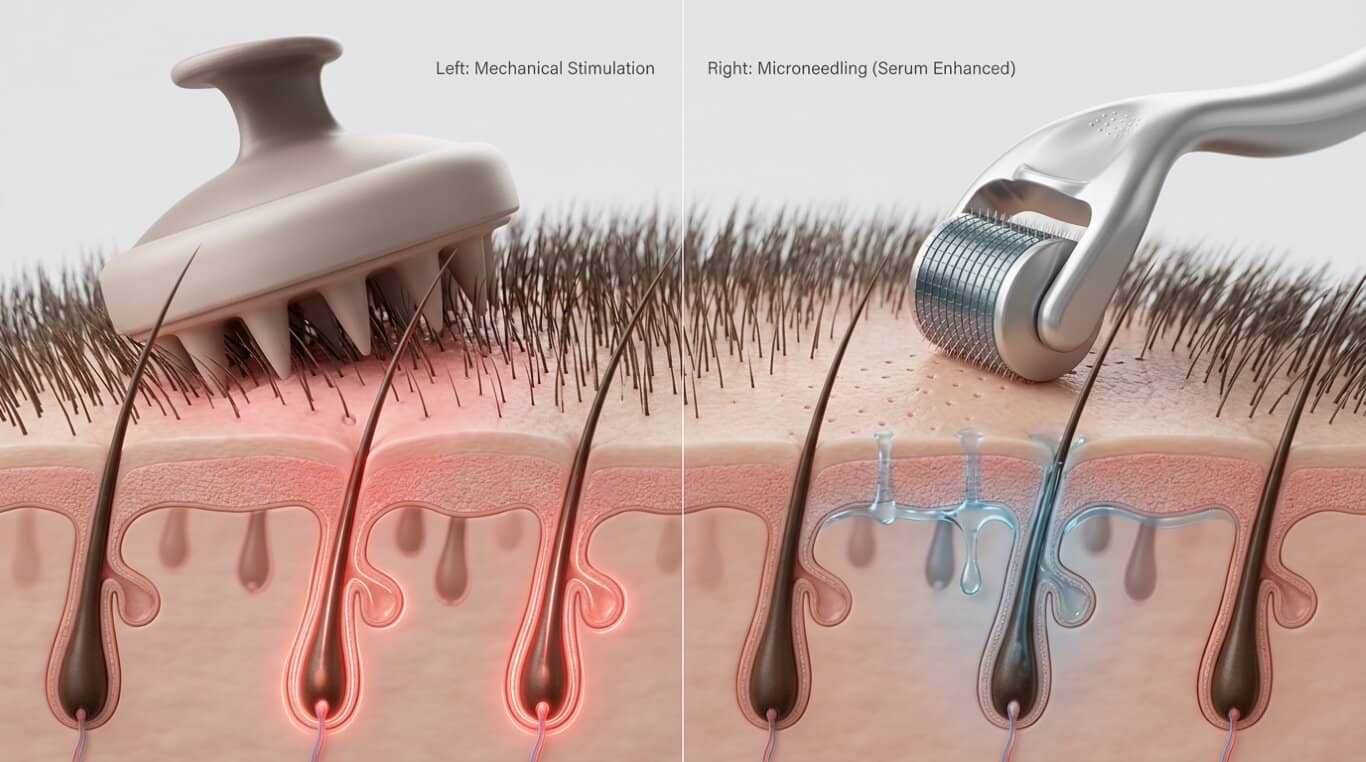
Warning: Microneedling is not a risk-free procedure. If done incorrectly it can lead to irritation, infection, or damage to the scalp. Before introducing a dermaroller into your routine it is advisable to consult a dermatologist or trichologist — especially if you are prone to scalp inflammation, dandruff, seborrhoeic dermatitis, or any skin lesions in the area of application.
Important rule: brushing or massage always before serum application — the serum goes on last and you do not brush or comb afterwards.
Categories of anti-grey products — how they differ and how they work
This section should be read before looking at the ranking. Without understanding the categories, evaluating products is impossible.
Biological melanogenesis stimulators (topical serums)
These are products that genuinely attempt to influence the biology of the hair follicle. They work through active ingredients that penetrate the scalp and act on melanocytes or McSCs.
Mechanism: peptides and active compounds stimulate the MC1-R receptor (melanocortin 1), which drives melanogenesis; they protect melanocytes from oxidative stress; they supply melanin precursors.
Key ingredients:
- Greyverse™ (Lucas Meyer Cosmetics) — a biomimetic α-MSH peptide (Palmitoyl Tetrapeptide-20 Amide). Activates the MC1-R receptor, increases catalase activity in the follicle (protecting against H₂O₂), and stimulates SIRT1. Clinical study: 2% Greyverse over 3 months reduced grey hair density by 30% and whiteness by 32%.
- Darkenyl™ (Givaudan) — a combination of taxifolin glycoside and N-acetylotyrosine. Taxifolin glycoside stimulates proliferation of outer root sheath stem cells (+30% in vitro) and protects against free radicals. N-acetylotyrosine provides a soluble melanin precursor. Clinical study: 1% Darkenyl over 4 months reduced the proportion of white hairs by 17%.
- MelanoGray™ (Mibelle Biochemistry) — an extract from organic Chios mandarins, supplemented with acetylotyrosine. Antioxidant activity and melanogenesis stimulation.
- Silverfree™ (Sederma) — a biomimetic dipeptide supporting pigmentation.
Who they work for, and who they don’t: they work best with early-stage greying (below 30%), when McSCs are still active. They require 3–6 months of consistent use. They do not work on white hairs with fully depleted McSCs.
Effect: visible only in new growth — not on already-grown grey hairs.
Natural and progressive topical dyes
These are products that chemically colour the hair shaft. They have nothing to do with melanocyte biology, though they are often marketed as if they do.
Mechanism: sulphur, tyrosine, and gallic acid react in the presence of oxygen with each other and with keratin, forming dark pigments that deposit on and in the hair shaft. The effect resembles the action of gradual hair dyes (such as Just For Men Gradual), but with “natural” ingredients.
Effect: appears quickly (7–21 days), but disappears almost immediately on discontinuation, as the dye is gradually washed out. Manufacturers of such products often claim they “stimulate melanocytes” — this is inaccurate or outright false as a description of the mechanism responsible for the rapid darkening of hairs.
Examples: GR-7, GR7 Pro, Mayraki Anti-Grey Treatment.
Shampoos with dyes
They work similarly to progressive dyes, but in shampoo form — the dye deposits on the hair surface during washing, progressively darkening it over several to a dozen or so uses.
When they make sense: when you want a quick cosmetic effect without an additional routine. Convenient for people who do not want a separate product.
Limitations: can give a reddish or uneven tint; require regular use to maintain the effect; suitable only for dark hair (can unattractively darken light or red hair).
Oral supplements
A broad category, in which the quality of products varies enormously.
Deficiency-correcting supplements — have a solid scientific basis when used for a genuine deficiency. They contain B12 (preferably in methylcobalamin form, not cyanocobalamin), zinc, copper, vitamin D, iron/ferritin.
“Anti-grey” supplements containing catalase — oral catalase is digested in the stomach to amino acids before it reaches the bloodstream. Its oral effectiveness is questionable. The sublingual form (under the tongue) has better absorption, but the route to hair follicles remains uncertain. If you want to support endogenous catalase — cruciferous vegetables, CoQ10, and dietary antioxidants are better options.
Biotin as a “grey hair cure” — a myth. Biotin supports hair and nail health, but has no documented effect on pigmentation. Many products use it as a “filler” with marketing value.
Ingredients with real potential: PABA (para-aminobenzoic acid) — some evidence of an effect on pigmentation; black sesame — traditional use with limited modern research.
Hybrid products: serum + supplement
The “inside-out” approach has biological justification — the serum acts locally on the follicles, while the supplement provides the ingredients necessary for melanogenesis at a systemic level. The crucial question, however, is whether each of the two components actually contains sensible active ingredients, rather than just fillers with good marketing.
Clinical and in-office treatments
PRP (platelet-rich plasma) — injections into the scalp, delivering growth factors. Used for hair loss; potential effect on McSCs — preliminary studies.
Exosomes — a new class of biological therapies, promising in 2025 research, but still experimental and expensive (several thousand dollars for a series of treatments).
Topical rapamycin — available off-label in several longevity clinics, particularly in the US. Biological mechanism documented in mice; in humans, data are still limited.
Product ranking and reviews
Evaluation methodology
Each product in the ranking is assessed according to six criteria:
- Biological mechanism — does the product target a real cause of greying?
- Quality of evidence — RCT in humans (highest), ingredient manufacturer’s own studies (lower), in vitro / mouse studies (lowest), no studies (zero).
- Formulation transparency — are the active ingredients disclosed with names and concentrations?
- Independent user opinions — outside the manufacturer’s website (Trustpilot, Reddit, specialist forums).
- Value for money — monthly cost relative to formulation quality and strength of evidence.
- Risks and side effects — documented or arising from the formulation.
Scale: ★☆☆☆☆ to ★★★★★
Category 1 — Products without scientific basis (scams)
How to spot an anti-grey scam — a list of warning signs
- Proprietary medical terms trademarked™ that do not exist in scientific literature (e.g. “Melanocyte Drift Syndrome™”)
- Reference to “Harvard breakthrough research” without citing any specific study
- Proprietary trademarked™ complexes without disclosing what they actually contain
- Reviews only on the manufacturer’s website, Trustpilot full of complaints about non-refunds
- Results in 2 weeks guaranteed
- Affiliate websites posing as “independent reviews”
Refress Hair Pigment Activator Spray ★☆☆☆☆
A textbook scam product. The company invented the fictitious medical term “Melanocyte Drift Syndrome™” and attributed it to “Harvard breakthrough research”. No such term or study exists in scientific literature. The ingredients are common herbs (Fo-Ti, ginger, ginseng) with no proven repigmentating action.
Reviews: Trustpilot — refressbrand.com (23 reviews, catastrophically rated): dozens of complaints about inability to obtain refunds, no company contact, undelivered orders, products damaged in transit.
Verdict: Avoid. Absolutely.
Category 2 — Progressive dyes and cosmetic products
GR-7 Professional / No More Grey Hair ★★★☆☆
- Manufacturer: Gr-7 Sp. z o.o., Poland
- Mechanism: oxidative colouring of the hair shaft (sulphur + tyrosine + gallic acid react with oxygen). Marketing claims “melanocyte stimulation”, but an effect in 7–21 days physically rules out a biological mechanism
- Studies: Eurofins confirmed cosmetic safety and efficacy in 25 people — this is not a study of biological mechanism
- Price: low (one of the cheaper products in the category)
Reviews: Trustpilot — gr-7.co.uk (243 reviews, rating 3.8/5, Trustpilot detected irregularities in how reviews were sourced). Generally positive regarding the cosmetic effect — most users see hair darkening within 7–21 days. Some users, after switching to the “maintenance phase”, notice rapid return of greyness — confirming the colouring, not biological, mechanism. Note: on Trustpilot, reviews have appeared suggesting the detection of very high lead concentrations in hair samples from product users — the manufacturer disputes this; the matter is not definitively resolved and is worth bearing in mind.
Pros: an honest product with a transparent formulation, works quickly cosmetically, free of silicones and aggressive ingredients, good value for money for a cosmetic effect.
Cons: the mechanism is not what the manufacturer claims; requires continuous use; effect disappears on discontinuation; unresolved questions about long-term safety (see Trustpilot reviews); will not replace a biological serum.
Verdict: Works cosmetically and quickly. Good as a complement to a biological serum for an immediate cosmetic effect, but with caveats regarding long-term safety.
Mayraki Anti-Grey Treatment ★★☆☆☆
Contains Polygonum multiflorum (Fo-Ti) — an herb used in traditional Chinese medicine. Fo-Ti has documented cases of hepatotoxicity with oral use, and its topical safety has not been sufficiently studied. The product may give a reddish tint and stains hands and bedding.
Reviews: Trustpilot — hairmayraki.com (443 reviews, rating 2.0/5): numerous complaints about delayed deliveries (8+ weeks), inability to obtain refunds, no customer service contact. Some positive reviews relate primarily to the nourishing effect of the hair products, not the anti-grey effect. One review describes a severe allergic reaction requiring a visit to a dermatologist.
Verdict: Not recommended — due to the Fo-Ti risk, serious customer service problems, and lack of convincing efficacy evidence.
Category 3 — Biological anti-grey serums
Neofollics Anti Grey Hair Serum ★★★★☆
- Manufacturer: Neofollics Hair Technology, Netherlands
- Active ingredients: Greyverse™ (Palmitoyl Tetrapeptide-20 Amide), Darkenyl™ (taxifolin glycoside + N-acetylotyrosine), Cucumis Melo Extract, Acetyl Tyrosine, Zinc Chloride, Niacinamide, Panthenol, Sodium Hyaluronate. Free from SLS, silicones, parabens.
- Ingredient studies: Greyverse — 3 months = -30% grey hair density, -32% whiteness; Darkenyl — 4 months = -17% white hairs; in vitro on the finished serum: +74.9% melanocyte proliferation
- Price: moderate (mid-range in the biological serum category)
Reviews: Trustpilot — neofollics.com (approx. 113 reviews, rating 3.1–3.4/5): a clear polarisation — some users (particularly with early greying) report a noticeable improvement after 3–6 months; others (especially older users or those with advanced greying) see no effect at all. Several negative reviews concern refusal of refunds when not enrolled in their results guarantee programme.
Pros: two independently patented active ingredients from reputable manufacturers (Givaudan, Lucas Meyer Cosmetics), complementary mechanisms (MC1-R + McSC proliferation), clean formulation without unnecessary additives.
Cons: clinical studies are primarily the ingredient manufacturers' own studies, not independent RCTs on the finished product; requires consistency for a minimum of 4–6 months; returns policy can be problematic.
Verdict: One of the better-formulated biological melanogenesis stimulators on the market. Realistic expectations: slowing and partial reversal with early greying, minimum 3–4 months of use.
HeyHair Root Revival / Root Revival Advanced ★★★☆☆
- Active ingredients: Greyverse™ + Darkenyl™ + Capixyl™ (Acetyl Tetrapeptide-3) — three peptides targeting different mechanisms. Capixyl strengthens the extracellular matrix and follicle anchoring
- Studies: same as for Greyverse and Darkenyl + Capixyl clinical data
- Reviews: Trustpilot — heyhair.co (43 reviews, rating 1.8/5 — small sample, statistically uncertain)
- Price: higher than Neofollics
Pros: three active ingredients with different mechanisms, also supports hair density (Capixyl).
Cons: higher monthly cost than competitors for a similar core formulation; a concerningly low Trustpilot rating with a small number of reviews.
Verdict: A solid alternative to Neofollics in terms of formulation, but the reviews give pause — worth monitoring.
RevivHair REV Advanced ★★★★☆
- Active ingredients: Greyverse™ + Darkenyl™ + MelanoGray™ + Silverfree™ + Wisegrade™ — five active ingredients, the most comprehensive formulation in this category
- Studies: independent 8-week study: all participants achieved at least -43% greying, average -65.2%
- Price: higher than Neofollics
Pros: the most comprehensive active formulation among serums on the market; an external (non-manufacturer) clinical study.
Cons: higher monthly cost; short observation period in the study (8 weeks); fewer independent reviews than Neofollics.
Verdict: The most robustly formulated serum in the category, with the best-documented effect in an independent study.
Category 4 — Serum + supplement systems
Neofollics Anti Grey Treatment ★★★★☆
A combination of the serum (reviewed above) with tablets containing: Quercetin, L-Tyrosine, Green tea extract (EGCG), Zinc, Copper, Bioperine®, Vitamin D, B6, Biotin, Folic acid, Selenium (Step 1) and sublingual catalase + B12 (Step 2).
Reviews: Trustpilot — neofollics.com — as above, reviews cover the whole brand.
Pros: dual local and systemic action; sublingual catalase is the only form with a realistic chance of absorption outside the digestive tract; quercetin supports the antioxidant environment of follicles.
Cons: limited value of the tablets for people already on an extensive supplementation regimen; higher monthly cost than the serum alone; returns policy — as with the serum.
Verdict: A sensible system for people starting from scratch, with no existing supplementation. For those with an extensive supplementation routine — the serum alone is sufficient.
Arey The System ★★★★☆
- Serum (To The Root): Palmitoyl Tetrapeptide-20 Amide (= Greyverse) within a proprietary Mela-9® complex + botanical extracts. Does not contain Darkenyl — an important difference from Neofollics.
- Supplement (Not Today Grey): B12 (methylcobalamin), copper, selenium, iron + PABA, Black Sesame Seed Extract, Fo-Ti Root. Manufactured in an NSF and GMP certified facility — a higher standard than most competitors.
- Clinical studies: RCT in 173 people, 6 months: 88% of participants with no greying progression vs. placebo. The best-designed clinical study among OTC products in this category.
- Price: higher than Neofollics Treatment
Reviews: Trustpilot — areygrey.com (6 reviews, rating 2.6/5 — the company has not claimed its Trustpilot profile, far too small a sample for statistical conclusions). The content of reviews focuses on logistical and customer service problems: hard-to-cancel subscriptions, a short return window (15 days), missing order confirmations, undelivered parcels. One review acknowledges that the product “works, but the subscription is a trap”. No reviews address the efficacy of the product itself. More representative independent opinions on Thingtesting: users praise improvement in overall hair condition and reduced greying after several months; a recurring complaint is that the serum leaves a residue on the scalp that can cause dandruff and acne; some users see no results.
Pros: the best clinical study in the category (RCT, 173 people, independent), high supplement production standard (NSF/GMP), honest marketing communication — the brand explicitly states it works for below 30% greying.
Cons: no Darkenyl in the serum (one mechanism instead of two); Fo-Ti in both the serum and the supplement — potential risk with long-term use; higher monthly cost; problematic returns policy (15 days); availability outside the US is difficult.
Verdict: The best scientifically substantiated system among available OTCs, with caveats regarding Fo-Ti, the absence of Darkenyl, and customer service issues.
Category 5 — Standalone oral supplements
Neofollics Anti Grey Hair Tablets ★★★☆☆
Reviewed above. Standalone, they make sense mainly for the sublingual catalase and quercetin. For those already on an extensive supplementation routine, the added value is limited.
Reviews: Trustpilot — neofollics.com — as above.
Arey Not Today Grey ★★★☆☆
A solid formulation with PABA, black sesame, and Fo-Ti, plus a high production standard (NSF/GMP). Downside: Fo-Ti in the formulation requires caution with long-term use.
Reviews: as with Arey The System — a small number of external reviews; more material on Thingtesting.
Standalone catalase supplementation ★★★☆☆
Sublingual catalase available from numerous manufacturers (e.g. Doctor’s Best, Now Foods) on Amazon. Cheaper than dedicated anti-grey supplements. For those already on an extensive supplementation routine, this is probably the most sensible complementary option alongside a biological serum.
Category 6 — Anti-grey shampoos
Neofollics Anti Grey Hair Shampoo ★★☆☆☆
Contains adhesive dyes that gradually darken the hair during washing. A cosmetic, not a biological mechanism. Suitable only for dark hair; may give a reddish tint on light or red hair.
Reviews: Trustpilot — neofollics.com — reviews cover the whole brand.
Verdict: Convenient as a standalone cosmetic for those seeking a simple effect. Not worth combining with a progressive dye (duplicating the mechanism) or treating as a substitute for a biological serum.
Summary table of all products
| Product | Category | Key active ingredients | Strength of evidence | Trustpilot | Monthly cost | Verdict |
|---|---|---|---|---|---|---|
| Refress Spray | Scam | no active ingredients | none | 1.0/5 (23) | low | ❌ Do not buy |
| GR-7 No More Grey Hair | Progressive dye | sulphur, tyrosine, gallic acid | Eurofins: safety | 3.8/5 (243) | low | ⚠️ OK as a cosmetic, with caution |
| Mayraki Anti-Grey | Progressive dye | Fo-Ti, tyrosine | no independent | 2.0/5 (443) | moderate | ❌ Not recommended |
| Neofollics Anti Grey Serum | Biological serum | Greyverse™ + Darkenyl™ | ingredient studies | 3.1/5 (113) | moderate | ✅ Recommended |
| HeyHair Root Revival | Biological serum | Greyverse™ + Darkenyl™ + Capixyl™ | ingredient studies | 1.8/5 (43) | moderate–high | ✅ Good formulation, questionable reviews |
| RevivHair REV Advanced | Biological serum | Greyverse™ + Darkenyl™ + MelanoGray™ + Silverfree™ | external 8-week study | no data | high | ✅ Strongest formulation |
| Neofollics Anti Grey Treatment | Serum + supplement system | Greyverse™, Darkenyl™, sublingual catalase | ingredient studies | 3.1/5 (113) | moderate–high | ✅ For beginners |
| Arey The System | Serum + supplement system | Greyverse, PABA, black sesame, Fo-Ti | RCT 173 people, 6 months | 2.7/5 (4) | high | ✅ Best-substantiated |
| Neofollics Tablets | Supplement | sublingual catalase, L-Tyr, Zn, Cu | indirect | 3.1/5 (113) | moderate | ⚠️ Consider |
| Arey Not Today Grey | Supplement | PABA, black sesame, Fo-Ti | indirect | 2.7/5 (4) | moderate | ⚠️ Consider |
| Neofollics Anti Grey Shampoo | Colouring shampoo | adhesive dyes | none | 3.1/5 (113) | low | ⚠️ Optional |
| VEGAMOUR GRO Ageless | Serum + supplement system | peptides, glycoproteins, Fo-Ti | own studies | no data | high | ⚠️ Average |
Why no anti-grey product has high Trustpilot ratings
Looking at the ratings of anti-grey products on Trustpilot, one might get the impression that the whole category is problematic. None of the reviewed products exceeds 4 stars, and most oscillate between 2.0 and 3.8. Before drawing hasty conclusions, it is worth understanding why this pattern is structural — and what it actually tells us.
Who writes reviews and why that matters
Trustpilot is written primarily by people with strong emotions: either very satisfied, or — far more often — frustrated. With anti-grey products this asymmetry is particularly pronounced for several reasons.
Expectations vs. reality. Most buyers expect biological results within a few weeks. Manufacturers — particularly of progressive dyes — deliberately maintain this ambiguity. When a customer discovers after a month that the greyness returned after stopping, they feel deceived. They write a one-star review. The customer who understands the mechanism and uses the product consistently for 6 months rarely comes back to leave a review.
Advanced greying and a start that is too late. Clinical studies of Greyverse and Darkenyl products were conducted on people with early greying (below 30%). A significant proportion of buyers have 50–80% grey hair. No available product will work biologically for them — and they are rightly dissatisfied. The problem lies in unrealistic expectations, not in the product itself.
Logistical problems inflate negative ratings. A significant proportion of negative reviews — particularly for Arey and Mayraki — concern not efficacy but customer service: undelivered parcels, hard-to-cancel subscriptions, narrow return windows. These are real problems, but they are unrelated to how the product formula actually works.
What this means in practice
A low Trustpilot rating in this category is not a signal that the product is a scam — unless we are dealing with Refress (1 star, complaints about non-receipt and no refunds) or Mayraki (2.0, widespread logistical problems). For biological products such as Neofollics (3.1–3.4) or Arey (2.6 with just 6 reviews), a low rating primarily reflects:
- inflated consumer expectations
- use by people with advanced greying, for whom biological effects are biologically impossible
- subscription and logistical frustration unrelated to the formula’s action
The only product with a relatively high rating in this category is GR-7 (3.8/5) — precisely because it works quickly and cosmetically, without promising biology. The effect is immediate and visible, and expectations are easy to meet.
The right question to ask
Instead of asking “how many stars does the product have on Trustpilot?”, ask yourself two questions:
- Do the negative reviews concern a lack of efficacy in people with early greying who used the product correctly — or rather dissatisfaction from people with advanced greying, or logistical problems?
- Do the positive reviews contain a specific description: % greying, duration of use, visible change in new growth — or are they vague and imprecise?
That is the only measure that actually says something about the product. The overall star rating in this category is too susceptible to structural distortions to serve as an independent criterion for choice.
Analysis of online user opinions
Where to find reliable opinions
The manufacturer’s website is the last place to look for honest reviews. More reliable sources — with links:
- r/greyhairreversal — a subreddit dedicated to the topic, an active community, many experience reports from users worldwide: reddit.com/r/greyhairreversal
- Longecity — a longevity forum with years-long threads on greying, technical discussions often with detailed mechanism analysis. Key thread: „Any valid way / regimen to reverse grey hair yet?" and „Anyone here cured their Grey Hair?"
- Hair Loss Cure 2020 — a blog tracking scientific research for many years, with an active comments section: „Can you Reverse Grey Hair?"
- Thingtesting — a platform with independent consumer reviews, valuable reviews of products such as Arey: thingtesting.com/brands/arey-grey/reviews
- Trustpilot — for GR-7 (gr-7.co.uk, 243 reviews) and Neofollics (neofollics.com, 113 reviews) it is worth reading both positive and negative. Negative reviews often contain more concrete information than flattering ones.
The most common patterns in reviews
“It works a little” — the most common pattern with biological products. Users on r/greyhairreversal and Longecity write about “maybe slightly fewer greys” or “hair looks darker” after 3–4 months, but rarely can point to clear before/after evidence. It is difficult to separate the product’s effect from placebo without photographic documentation.
“It only worked at first, then the effect plateaued” — characteristic of colouring products (GR-7). On the Bioenergetic Forum, users note directly that darkening with GR-7 reaches a plateau — once the dye has saturated the shaft, further use produces no additional effect. This is physical confirmation that we are dealing with a progressive dye, not biology.
“The effect disappears on stopping” — almost universal with progressive dyes, again confirming the cosmetic mechanism. With biological serums, users who stopped Neofollics after several months report a gradual return to their earlier state within 2–4 months.
“I supplemented B12 and my greyness reversed” — one of the most credible patterns on forums such as Longecity. Multiple accounts — including one very detailed one from a 28-year-old user — describe complete reversal of greying after correcting a B12 deficiency. This is consistent with the medical literature and constitutes the strongest anecdotal evidence of biological repigmentation.
“I lost money seeing no results” — the dominant pattern with advanced greying. On Trustpilot for Neofollics it is clear that the greatest disappointment comes from people aged 50+ with over 50% grey hair. From a biological perspective this is understandable — but manufacturers rarely communicate this clearly.
What emerges from user experience
Drawing data from various platforms, several conclusions can be extracted that are internally consistent and align with what science says:
Biological serums (Neofollics, Arey) work noticeably mainly in people under 40 with below 30% greying — which matches the clinical study parameters of the ingredients. With advanced greying, biological effects are negligible or unobserved, consistent with the biology of McSC depletion.
GR-7 consistently delivers a fast cosmetic effect — and consistently disappears on stopping. The Bioenergetic Forum discussion attempts to find a biological mechanism, but even enthusiasts acknowledge that the colour returns after a break. It is effectively a progressive dye, regardless of how the manufacturer markets it.
Correcting deficiencies works better than any topical product — but only with deficiency-related greying. Longecity has threads with accounts of greying reversal after B12, copper, or iron; there are no such accounts from people with a normal metabolic profile.
Where opinions align with science, and where they contradict it
Align:
- Fast effect of progressive dyes (7–21 days) and its impermanence — consistent with the chemical mechanism
- Partial repigmentation with early greying after 3–6 months of serum use — consistent with Greyverse and Darkenyl clinical data
- Full repigmentation after correcting B12 in deficiency cases — documented in medical literature
Contradict or raise doubts:
- Anecdotal accounts of “colour returning” after resveratrol, NMN, or Fo-Ti have circulated on Longecity for years — but without photographic documentation and without controlling for variables, they cannot be treated as evidence of those substances' action
- Some GR-7 users describe the product as a biological “colour restorer”, not a dye — which is inaccurate, though understandable from the user experience perspective
How to read reviews without being deceived
Four criteria that separate a valuable review from noise:
- Documentation: does the author give their starting % of greyness, duration of use, and photos? Without this data, the review has anecdotal value only.
- One variable: did the author change only one element of their protocol? If they started a serum, changed their diet, and reduced stress simultaneously — it is impossible to know what worked.
- Observation period: did the author use the product for a minimum of 4 months? Shorter reviews of biological serums are useless — the new growth simply has not had time to emerge.
- No conflict of interest: does the author link to an affiliate or shop? Many “reviews” on blogs and YouTube are disguised advertisements.
The most common mistakes in approaching grey reversal
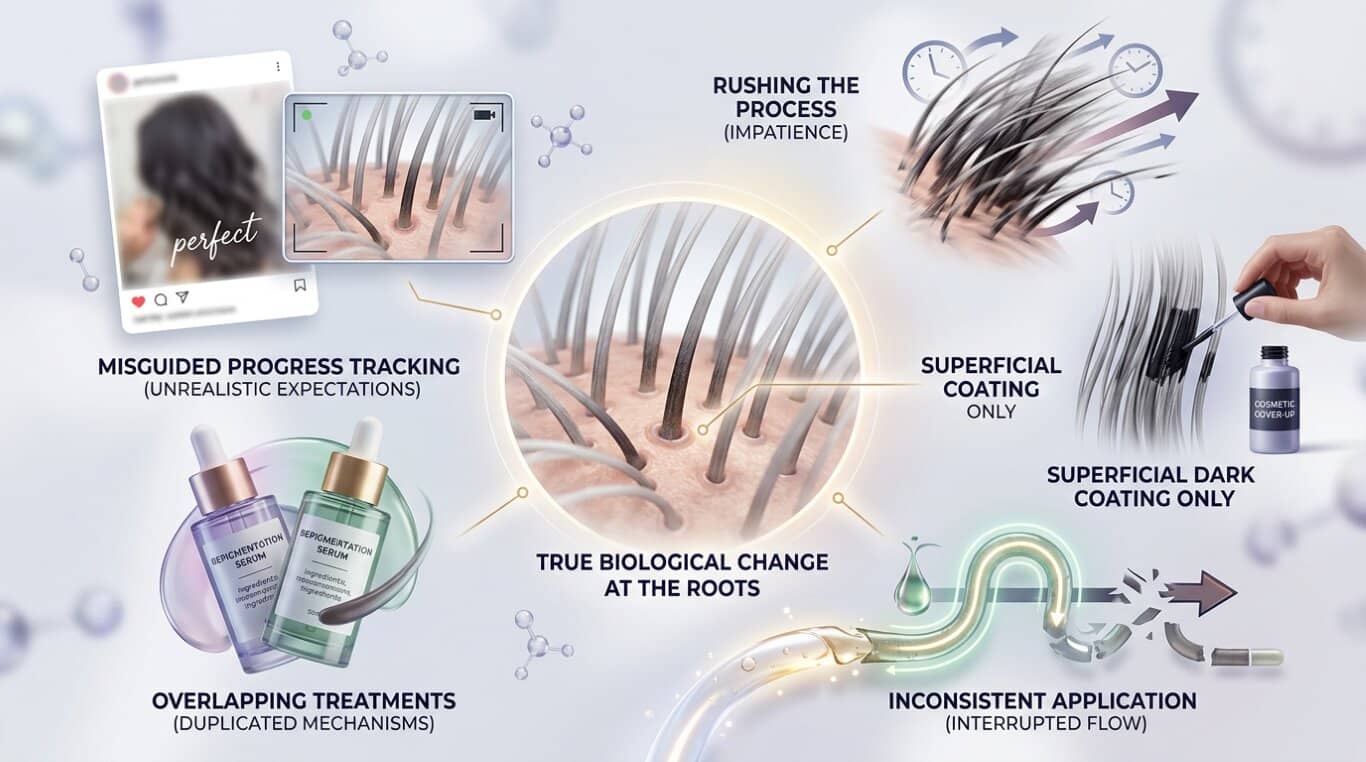
Expecting quick results
A biological change in pigmentation takes at least 2–3 months before it becomes visible — that is how long it takes for new, darker growth to reach a noticeable length at a rate of 1 cm per month. If a product delivers an effect in 2 weeks — it is a dye.
Confusing cosmetic effect with biological effect
“My hair looks darker” after 3 weeks of using GR-7 is a cosmetic effect, not repigmentation. True repigmentation is visible as dark new growth at the roots, while the older hairs remain grey.
Lack of consistency in application
A biological serum requires daily use for a minimum of 3–4 months. Breaks partially reset any progress achieved. Most cases of “this doesn’t work” result from irregular use or too short a test period.
Combining multiple products with the same mechanism
Two progressive dyes simultaneously = duplicating the same mechanism. Two biological serums with identical active ingredients = waste. Exception: products with different mechanisms (biological serum + progressive dye work complementarily).
Lack of documentation and incorrect assessment of results
Without before/after photos you cannot evaluate effects. Memory is unreliable and susceptible to placebo. Minimum: one photo in the same light, at the same angle and distance, every month — this is the only reliable method of assessment.
How to approach this like a scientist — the N=1 protocol
How to set up the experiment
Change only one variable at a time. If you start a serum, change your diet, and add supplements simultaneously, you will not know what made the difference. Optimal sequence:
- First: blood tests + correcting deficiencies for 3 months
- Then: introduce one topical product
- After 4 months: assess results, optionally add a second element
How to document progress
- The same lighting (natural daylight, at a window, in the same spot)
- The same angle (ideally photograph from the front and from above, temples separately)
- The same distance from the camera
- Every 4 weeks, on the same day of the month
- Record the date, products used, and how consistently

How to assess % greying
Visual breakdown: below 10% greying = a few isolated grey hairs; 10–30% = early greying; 30–60% = moderate; above 60% = advanced. You can also count grey hairs in a representative area (e.g. at the temple) and compare between months.
How to avoid cognitive biases
- Confirmation bias: you are looking for evidence that the product works. Take photos regardless of how you feel.
- Placebo: an improvement in general wellbeing (because you are taking care of yourself) can be confused with the product’s effect.
- Regression to the mean: if you started the protocol at a moment of intense greying, whatever you did, you might have seen improvement.
After how many months to conclude that something is not working
A minimum of 4 months of consistent, daily use. With early greying (below 30%) — 6 months. With advanced greying — a biological product will probably not produce spectacular results regardless of the time.
How to build your own protocol
Questions you need to ask yourself before choosing a strategy
- What is my % of greying? (Early vs. advanced)
- How long have I had grey hairs in this area?
- Have I had blood tests for deficiencies?
- What is my level of chronic stress?
- Do I prefer a biological effect (slow, more lasting) or a cosmetic one (fast, temporary)?
- What is my monthly budget and how much time can I devote to a routine?
Protocols for different profiles
Profile A: 25–35 years old, first grey hairs, 5–15% greying
Goal: prevention and slowing.
Minimum: blood tests → correcting any deficiencies → biological serum (Neofollics or equivalent with Greyverse + Darkenyl) every evening. Optionally: dermaroller 2x/week before the serum.
Expectations: realistically — slowing of progression, possible partial repigmentation with 4–6 months of consistency.
Profile B: 35–45 years old, 20–30% greying, biological orientation
Goal: slowing + partial repigmentation.
Optimal protocol: tests → biological serum daily + lifestyle (stress, sleep, diet) + optionally progressive dye (GR-7) in the morning, Neofollics serum in the evening.
Expectations: clear slowing, possible noticeable repigmentation of new growth with 6 months of consistency.
Profile C: 45+ years old, above 40% greying, primarily cosmetic goal
Goal: the best possible visual effect without having to dye.
Protocol: GR-7 or progressive dye as the primary method + biological serum as support for protecting surviving melanocytes. Realistic expectations: not full reversal, but slowing of further greying.
Profile D: everyone — tests first
If B12 is below 300 pg/ml or ferritin below 30 µg/L — correcting these deficiencies will give you more than any topical product.
What makes sense to combine, and what is a waste
Biological serum + progressive dye (e.g. Neofollics serum + GR-7): Yes — two different mechanisms, mutually complementary. Apply the serum in the evening, GR-7 on other evenings or in the morning. Before Neofollics — the scalp must be clean.
Two biological serums with an identical formulation: No — waste. One serum with Greyverse + Darkenyl at an adequate concentration is sufficient.
Colouring shampoo + biological serum: Optional — the shampoo does not interfere with the serum’s action, but it is another colouring product if you already have GR-7.
Supplements overlapping with your own supplementation: If you are already taking B12, D, zinc, and magnesium — Neofollics tablets add mainly sublingual catalase and quercetin. You can buy sublingual catalase separately, more cheaply.
Practical recommendations
Minimum protocol (small budget, simple routine)
- Blood tests — a one-off cost that can change everything
- Correcting any deficiencies
- Biological serum with Greyverse + Darkenyl (Neofollics Anti Grey Hair Serum) — every evening on a clean scalp
- A shampoo free of sulphates and silicones
Time to first assessment: 4 months.
Optimal protocol (higher budget, full approach)
- Blood tests + targeted supplementation
- Biological serum every evening
- Dermaroller (0.25–0.5 mm) 2x/week before the serum (+5x absorption)
- Regular scalp brushing
- Reduction of chronic stress (the most important element that requires no product)
- Optionally: progressive dye (GR-7) for a cosmetic effect
- Optionally: sublingual catalase as a supplementation add-on
When to focus on cosmetic effect instead of biological
If: you have above 50% grey hair, have been greying for over 10 years in the given area, or are above 55 — realistic biological expectations are low. A progressive dye (GR-7) or conventional dye will give you a reliable cosmetic effect for far less money. You can use a biological serum to protect remaining pigment, but without expecting dramatic repigmentation.
When to give up
If after 6 months of consistent use you see no difference in new growth — the biological product has not worked for your profile. Either the McSCs are too depleted, or the mechanism is insufficient for your greying profile.
The future of grey reversal
Reactivation of melanocyte stem cells
The 2023 discovery of “trapped” McSCs opens a new therapeutic direction: instead of replacing depleted cells, one can try to restore mobility to those that are “stuck”. Researchers at NYU Langone suggest that substances increasing WNT signalling or reducing McSC adhesion to the matrix could “unblock” these cells and restore normal pigmentation.
CS-001 — a drug for greying in Phase 3 trials
Applied Biology is conducting the first-ever Phase 3 clinical trial of a substance specifically designed as a greying therapy from 2025–2027. CS-001 is a small molecule affecting the lysosomal transport of melanin from melanocytes to keratinocytes. Pilot studies and in vitro data are promising. This is the first serious candidate for a pharmaceutical against grey hair.

Gene and epigenetic therapies
In the longer term (10–20 years), gene editing technologies (CRISPR) and epigenetic reprogramming (aimed at “rejuvenating” McSCs to an earlier stage) may offer a genuine biological solution. For now, this is the domain of basic research, not clinical practice.
A realistic assessment: when grey reversal may become truly effective
2027: Phase 3 CS-001 results — possibly the first genuinely effective pharmacological treatment for early greying.
2028–2032: availability of the first exosome therapies in selected clinics — building on the results of Lueangarun et al. (2025).
2030–2040: perhaps the first real therapies targeting McSC reactivation at a genetic or epigenetic level — inspired by the discovery of Sun et al. (2023).
Until then: realistic expectations are slowing, protection, and partial repigmentation with early greying.
FAQ
Can the beard be de-greyed?
Yes — the biological mechanism is identical to the scalp. Beard follicles have McSCs, melanocytes, and an analogous growth cycle. A biological serum (e.g. Neofollics) can be applied to the facial skin around the beard. GR-7 is permitted on the beard by the manufacturer itself, though it notes it was tested only on the scalp. Facial skin is more sensitive — a test on a small area is recommended.
Is greying hereditary?
Yes, partially. The IRF4 gene accounts for approximately 30% of variation between people. The age at which your parents started going grey is a good predictor for you — but not a determinism. Environmental, lifestyle, and metabolic factors have a real influence.
How to assess the percentage of greying?
Visually: below 10% — a few isolated grey hairs; 10–30% — early greying (first grey strands, visible but not dominant); 30–60% — moderate (roughly half and half); above 60% — advanced. Biological products make most sense below 30%.
How long should you give a product?
A minimum of 4 months of daily, consistent use for a biological product. If you see no difference in new growth after 4 months — the product is not working for your profile. For progressive dyes: an effect should be visible within 7–21 days.
Can grey hair products cause harm?
Biological serums (Greyverse, Darkenyl) — a good safety profile; risk: rare allergic reactions to auxiliary ingredients (essential oils). Progressive dyes — safe for the scalp; lower allergic risk than conventional dyes. Fo-Ti (Polygonum multiflorum) in oral supplements — documented cases of liver damage; avoid in people with liver problems or at high doses long-term.
What about pregnancy and breastfeeding?
Neofollics serum is not officially classified as contraindicated in pregnancy/lactation (unlike Neofollics shampoo, which explicitly prohibits this). But the absence of a prohibition does not mean confirmation of safety. General principle: before applying any topical product or supplement during pregnancy or breastfeeding — consult a doctor.
Does a dermaroller really work?
Yes — in the sense of improving serum absorption. Microneedling with 0.25–0.5 mm needles creates microchannels in the epidermis through which active substances penetrate deeper. Studies show that serum absorption can increase by up to 5 times. The dermaroller does not replace the serum, but amplifies its action. Use 2x/week, before serum application, not after.
Can you reverse grey hair naturally — without products?
If greying results from deficiencies — yes, dietary correction and supplementation can reverse greying. If it results from stress — stress reduction has a proven repigmentating effect. If it results from genetics and age — diet and stress alone will probably not be sufficient, but can slow the process. A diet rich in luteolin, quercetin, copper, and zinc forms a sensible foundation for any strategy.
Summary
10 key conclusions
-
Greying is reversible only in certain cases — with deficiencies and stress-related greying. With genetic and advanced age-related greying — it can be slowed, but not reversed with products available today.
-
Most products on the market are cosmetic dyes, not biological melanogenesis stimulators — and there is nothing wrong with that, provided this is communicated honestly.
-
The fundamental question before any purchase: which mechanism do I want to engage — cosmetic (fast, temporary) or biological (slow, potentially more lasting)?
-
Blood tests are more important than any product — if greying results from a B12 or copper deficiency, supplementation will reverse greying more effectively than the most expensive serum.
-
Greyverse and Darkenyl are the best-documented biologically active ingredients available in consumer products. They have complementary mechanisms and should be used together.
-
GR-7 is an honest progressive dye from a Polish company — but it is not what it claims to be (a melanocyte stimulator). It works quickly and costs little.
-
Refress and similar products with fictitious medical terms are scams — of no value, sometimes with no possibility of a refund.
-
Biological effects are visible after 3–6 months of daily, consistent use — not after 2 weeks.
-
A dermaroller (0.25–0.5 mm) used before the serum can increase absorption by up to 5 times — a cheap and sensible upgrade to any biological protocol.
-
The future looks promising: CS-001 in Phase 3, discoveries about McSC mobility, and exosome therapies suggest that genuinely effective options may emerge within 5–10 years.
What really works
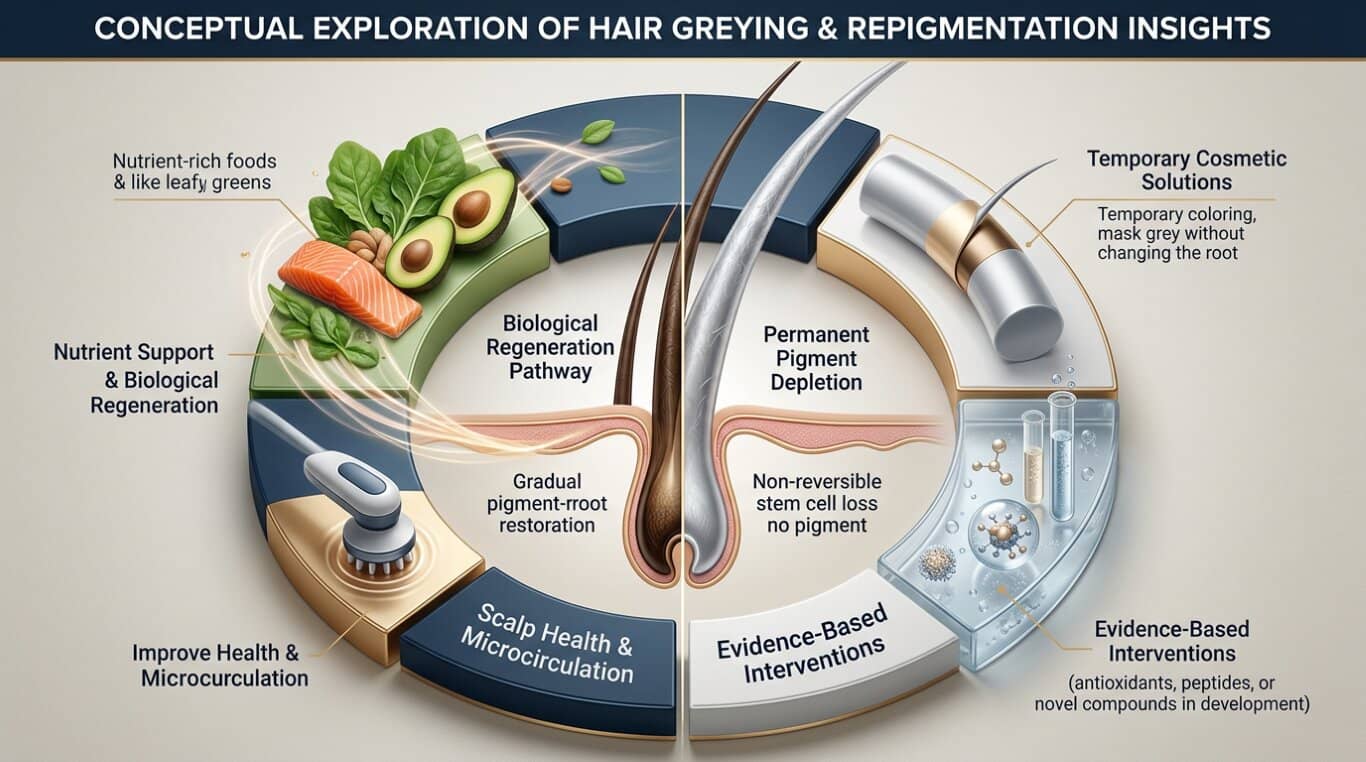
Slowing greying and partial repigmentation with early greying: a serum with Greyverse + Darkenyl (Neofollics or equivalent), used daily for a minimum of 4–6 months, on a clean scalp, with a dermaroller 2x/week.
Cosmetic effect: GR-7 with daily evening application — cheap, fast, cosmetically effective.
Genuine biological repigmentation: correcting documented deficiencies (B12, D, zinc, copper) — the only method with the strongest human evidence.
What is mainly marketing
All claims of “melanocyte reactivation in 2 weeks”, fictitious trademarked medical terms, “independent reviews” that are affiliate websites, biotin as a grey hair remedy, Fo-Ti as a safe oral supplement without caveats.
Bonus: The longevity perspective
Greying as a biomarker of ageing
Greying is not merely an aesthetic change — it is one of the most visible external markers of biological ageing. Melanocyte stem cells become depleted with age — just like other stem cell pools in the body. The rate and intensity of greying may partially reflect the overall rate of cellular ageing.
Interestingly, research shows a correlation between greying and certain cardiovascular health indicators, inflammatory markers, and oxidative stress. This does not mean grey hairs cause disease — but that they may signal biological processes occurring more deeply.
The connection between greying, mitochondria, and overall health
Mitochondrial cell function is crucial for melanocyte viability. These cells have an exceptionally high energy demand (ATP) during active melanogenesis. Mitochondrial dysfunction — increasingly recognised as a central mechanism of ageing — directly undermines the melanocytes' ability to produce pigment.
Interventions supporting mitochondrial function (NMN/NR, CoQ10, aerobic training, caloric restriction) may indirectly support melanocyte viability — though direct evidence for repigmentation via this route remains very limited.

Why grey hair is more than an aesthetic issue
The longevity approach to greying is not a battle against appearance, but an interest in the signals the body is sending. Early, intense greying under strong stress is a signal that the sympathetic nervous system is chronically activated — with consequences far beyond hair colour. Deficiency-related greying — B12, copper, iron — is a call for metabolic correction, not merely a cosmetic one.
From a longevity perspective: address the biological causes of greying (stress, deficiencies, oxidative stress), and the side effect may be not only slower greying — but also better metabolic condition, better recovery, and a lower level of systemic ageing.
Bibliography
All scientific studies cited in the article are listed below with full bibliographic details and links to sources.
[1] Rosenberg et al. (2021) — stress-induced greying and its reversibility in humans
Rosenberg AM, Rausser S, Ren J, Mosharov EV, Sturm G, Ogden RT, Patel P, Kumar Soni R, Lacefield C, Tobin DJ, Paus R, Picard M. Quantitative mapping of human hair greying and reversal in relation to life stress. eLife, 22 June 2021; 10:e67437.
DOI: 10.7554/eLife.67437
- Full text (eLife): https://elifesciences.org/articles/67437
- PubMed: https://pubmed.ncbi.nlm.nih.gov/34155974/
- PMC (full text, open access): https://pmc.ncbi.nlm.nih.gov/articles/PMC8219384/
The first study in humans with a quantitative analysis of hair strand pigmentation over time. Demonstrated that stress-induced greying is reversible — partial repigmentation follows when the stress subsides. Hair strands from 14 volunteers were analysed and pigmentation patterns correlated with stress diaries.
[2] Sun et al. (2023) — the McSC “trapping” mechanism, NYU Langone
Sun Q, Lee W, Hu H, Ogawa T, De Leon S, Katehis I, Lim CH, Takeo M, Cammer M, Taketo MM, Gay DL, Millar SE, Ito M. Dedifferentiation maintains melanocyte stem cells in a dynamic niche. Nature, 19 April 2023; 616:774–782.
DOI: 10.1038/s41586-023-05960-6
- Full text (Nature): https://www.nature.com/articles/s41586-023-05960-6
- PubMed: https://pubmed.ncbi.nlm.nih.gov/37076628/
- NYU Langone press release: https://nyulangone.org/news/study-links-stuck-stem-cells-hair-turning-gray
A mouse study using 3D imaging and scRNA-seq. Demonstrated that McSCs normally migrate between the bulge region and the follicle bulb, responding to WNT signals. With age or accelerated growth cycles, McSCs “get stuck” in the bulge, losing access to maturation signals and the ability to produce melanocytes.
[3] Iida et al. (2024) — luteolin reverses greying in mice, Nagoya University
Iida M, Kagawa T, Yajima I, Harusato A, Tazaki A, Nishadhi DASM, Taguchi N, Kato M. Anti-Graying Effects of External and Internal Treatments with Luteolin on Hair in Model Mice. Antioxidants, 17 December 2024; 13(12):1549.
- Full text (MDPI, open access): https://www.mdpi.com/2076-3921/13/12/1549
- PubMed: https://pubmed.ncbi.nlm.nih.gov/39765877/
- PMC (full text): https://pmc.ncbi.nlm.nih.gov/articles/PMC11673595/
A study in mice genetically predisposed to rapid greying (Ednrb+/−;RET). Of three antioxidants tested (luteolin, hesperetin, diosmetin), only luteolin — administered topically or orally — completely prevented greying. Mechanism: protection of keratinocyte stem cells (KSCs) against senescence and preservation of endothelin signalling between KSCs and McSCs. Published 17 December 2024, publicly announced in February 2025.
[4] Applied Biology — CS-001 clinical trial, Phase 3 (2025–2027)
Clinical Study of CS-001 As a Treatment for Canities (Grey Hair). Applied Biology, Inc. Sponsor: Andy Goren, MD. Registration: NCT06745336. Start: 15 June 2025.
- ClinicalTrials.gov: https://clinicaltrials.gov/study/NCT06745336
CS-001 is a small molecule affecting the lysosomal transport and transfer of melanin from melanocytes to hair keratinocytes. In vitro and pilot studies have shown repigmentation of grey hairs. Phase 3 is the first clinical trial on this scale ever conducted for a pharmacological treatment of grey hair. Results expected in 2027.
[5] Lueangarun et al. (2025) — exosome therapy and grey hair repigmentation
Lueangarun S, Huang PPH, Chou WY, Theodorakopoulou E, Lemes D. Hair Repigmentation Outcomes in Patients With Graying Hair Treated With Exosome Therapy: A Cross-Sectional Observational Study. Journal of Cosmetic Dermatology, 7 November 2025; 24(11):e70526.
DOI: 10.1111/jocd.70526
- PubMed: https://pubmed.ncbi.nlm.nih.gov/41201122/
- PMC (full text, open access): https://pmc.ncbi.nlm.nih.gov/articles/PMC12593320/
- Wiley Online Library: https://onlinelibrary.wiley.com/doi/10.1111/jocd.70526
A cross-sectional observational study of 10 patients with grey or white hair, treated with exosomes from rose stem cells (RSCEs) by various application methods (jet, fractional laser, microneedling). Mean repigmentation score: 2.8/4; 60% of participants achieved ≥50% improvement. Better outcomes correlated with shorter greying duration, presence of androgenic alopecia, and moderate baseline severity. No adverse events.