Gina Lapertosa
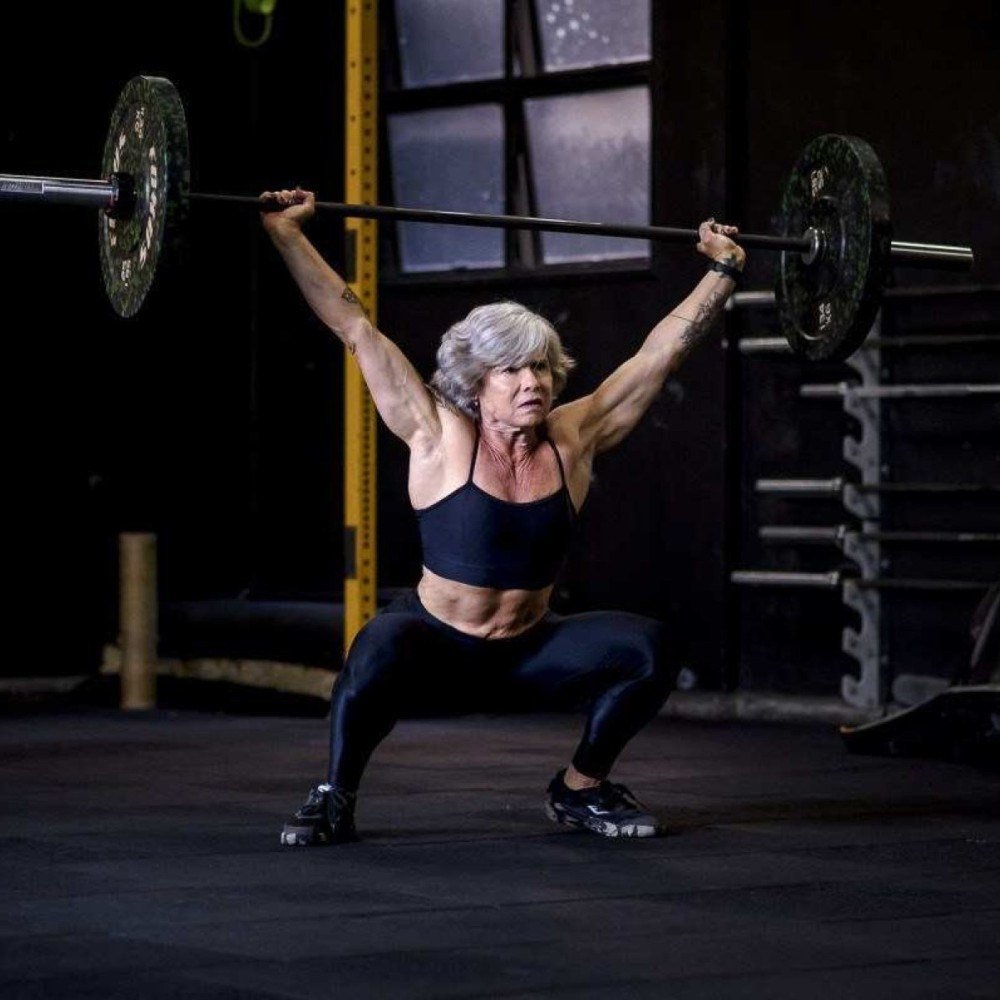
A Brazilian CrossFit Masters athlete showing that strength, performance and athletic ambition can keep growing after 60.
Basic data
Gina Lapertosa, listed in the official CrossFit Games profile as Gina Viana, is a Brazilian CrossFit Masters athlete. In 2024, she placed 4th at the CrossFit Games in the Women 60–64 division.
Age
64 years
Country
Brazil
Top achievement
4th place at the 2024 CrossFit Games in the Women 60–64 division
Video
Story
Gina Lapertosa is a Brazilian CrossFit Masters athlete, listed in the official CrossFit Games profile as Gina Viana. In 2024, she placed 4th at the CrossFit Games in the Women 60–64 division, becoming one of the most inspiring athletes in her age group.
According to Brazilian media, she is a retired early childhood education teacher. Sport had been part of her life before CrossFit — including volleyball and swimming — but CrossFit came later. Media reports say she started training CrossFit around the age of 55, after a motorcycle accident and with encouragement from her daughter.
Her story is a strong example of entering strength and conditioning sport later in life and still reaching a high competitive level. Gina shows that age does not have to mean giving up progress, competition or ambitious physical goals.
Training
Publicly available materials show Gina as an athlete training in the CrossFit model — combining strength, gymnastics, conditioning, loaded movements and functional fitness. Her public content often highlights training that requires broad physical capacity, coordination, mobility and resilience.
Her result at the 2024 CrossFit Games suggests preparation far beyond casual exercise. Competing at this level in a Masters division requires strength, endurance, technical skill, mental resilience and the ability to recover consistently.
There is not enough confirmed public information to describe her exact weekly training plan, training volume, periodization or specific workout structure.
Health
Gina’s story is especially relevant from a longevity perspective because it demonstrates the value of maintaining high functional fitness later in life. CrossFit in the Masters division requires muscle strength, power, stabilization, mobility, coordination and cardiovascular fitness — all qualities strongly connected with independence and quality of life in later decades.
In her case, the key point is not only the competitive result, but also the message behind it: fitness after 60 does not have to be limited to light activity. With appropriate progression and consistency, training can still include strength development, skill learning and competition.
There is no confirmed public information about medical diagnoses, lab results or specific health interventions. For that reason, this profile does not attribute any medical protocols or health claims to her.
Philosophy
Gina’s public image is built around activity, consistency and the idea that age should not automatically limit athletic ambition. Her popularity on social media comes partly from the way she challenges the stereotype that people after 60 should train only cautiously or conservatively.
Her example supports the idea that training can be a tool for maintaining agency, confidence and independence. From a longevity perspective, the core lesson is clear: the body can still adapt to training later in life when the process is regular, progressive and matched to the person’s capabilities.
Achievements
- 4th place at the 2024 CrossFit Games in the Women 60–64 division.
- 5th place in the 2024 Age Group Quarterfinal in the Women 60–64 division.
- 9th place in the 2024 Semifinals in the Women 60–64 division.
- 43rd worldwide in the 2024 CrossFit Open in the Women 60–64 division.
Takeaways
Gina Lapertosa’s story shows that strength and conditioning training can be an important part of healthy aging. The point is not only the sports result, but also the ability to keep moving, adapting, learning and developing physical capacity.
Key takeaways from her profile:
- Age does not have to mark the end of physical progress.
- Strength, endurance and technical skill can still be developed after 60.
- Functional training can support independence, confidence and quality of life.
- A late start does not exclude high-level athletic performance.
- Public examples of active older adults help shift the cultural image of aging.
Sources
- CrossFit Games — athlete profile: https://games.crossfit.com/athlete/2632952
- Gina Lapertosa Linktree: https://linktr.ee/ginalapertosa
- Instagram: https://www.instagram.com/ginalapertosa/
- TikTok: https://www.tiktok.com/@ginalapertosa
- YouTube: https://www.youtube.com/channel/UCmpVgXBXydPKcxE59TsdQVg
- YouTube — 2024 CrossFit Games vlog: https://www.youtube.com/watch?v=MSoGaE0fyfM
- UOL — profile about Gina Lapertosa: https://www.uol.com.br/esporte/ultimas-noticias/2025/02/09/aposentada-crossfit-redes-sociais-quem-e.htm
- Correio Braziliense — article about the CrossFit world championship final: https://www.correiobraziliense.com.br/brasil/2024/08/6914646-mulher-de-62-anos-esta-na-final-de-campeonato-mundial-de-crossfit.html